
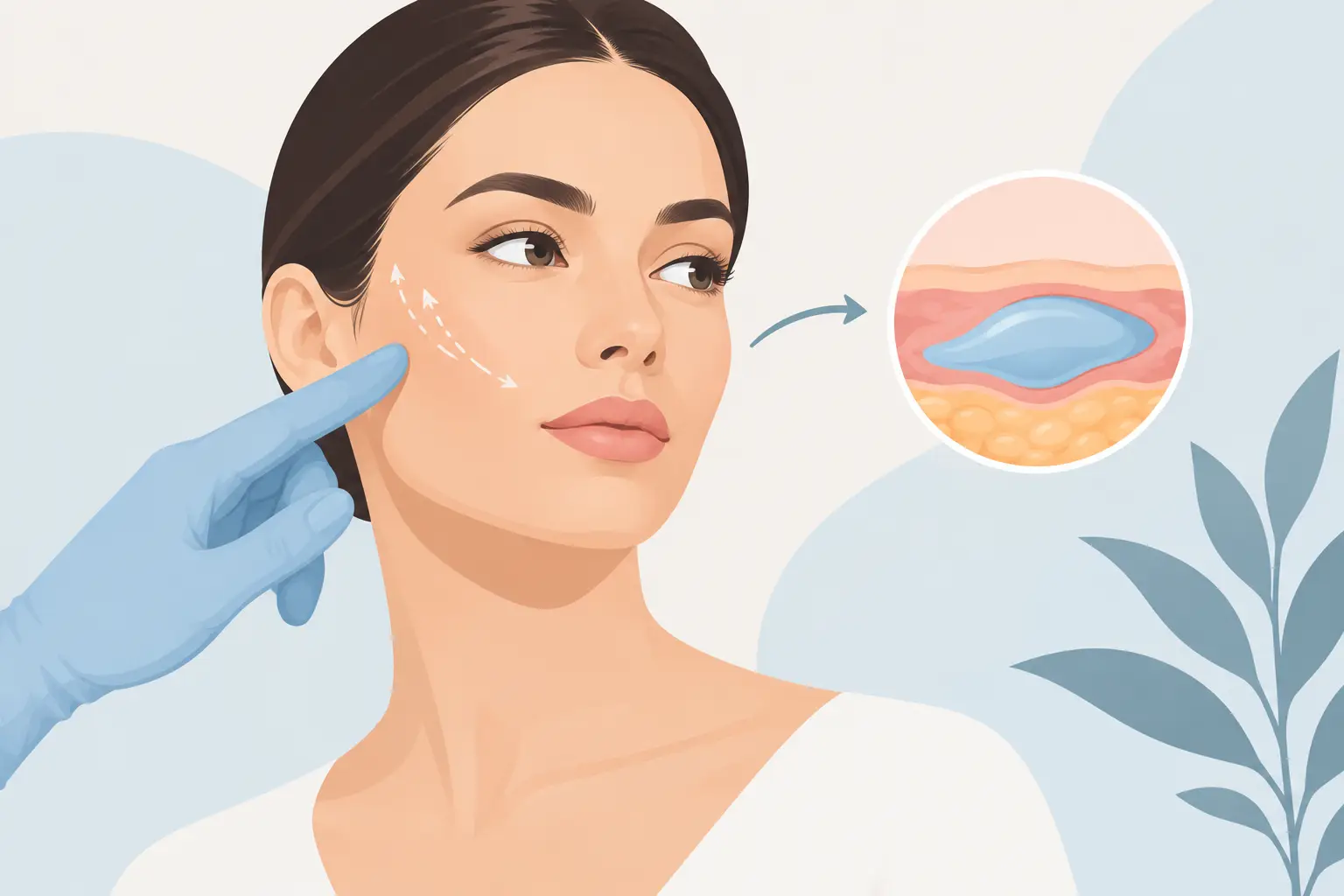
A smooth lip treatment can look noticeably fuller for the first few days, then settle into a softer, more natural shape. That normal settling is not the same as migration. Still, can filler migrate after an injection? Yes, it can, although true filler migration is less common than social media may suggest. The risk depends on the product used, the injection technique, the treatment area, the amount of filler placed, and your individual anatomy.
For patients considering dermal fillers, the goal is not simply adding volume. It is placing the right amount of an appropriate filler in the correct tissue plane to improve shape, balance, and facial support. A careful assessment before treatment helps reduce the risk of an overfilled or unnatural result.
What Does Filler Migration Actually Mean?
Filler migration means hyaluronic acid filler moves away from its intended placement and becomes visible or palpable in a nearby area. For example, lip filler that extends above the upper lip border may create fullness in the skin between the lip and nose. Under-eye filler that sits too superficially or attracts fluid may create persistent puffiness that extends beyond the tear trough.
Migration is different from initial swelling, bruising, or temporary unevenness. Most fillers draw water into the treatment area, and the injection itself can cause inflammation. In the first days after treatment, lips may appear larger, firmer, or slightly asymmetrical. This usually improves as swelling resolves.
Migration also should not be confused with a treatment result that is simply too full. A patient may have filler exactly where it was injected but still feel the area looks overdone because too much product was placed, treatments were repeated too frequently, or facial proportions were not carefully considered.
Can Filler Migrate in Every Treatment Area?
Any injected filler has the potential to shift within tissue, but certain areas require more precision because they move frequently, have delicate anatomy, or hold swelling more easily. The lips, tear troughs, cheeks, chin, jawline, and folds around the mouth all have different structural needs.
The lips receive a great deal of attention because migration can be more visible there. Repeated placement of large volumes, injecting too close to or beyond the vermilion border, or treating already overfilled lips can contribute to a puffy appearance above the lip. In some cases, what looks like migration may be residual filler from prior treatments combined with new product and swelling.
The under-eye area is another region where product selection and placement matter greatly. This tissue is thin, and the area is prone to fluid retention. Filler placed too superficially can create a bluish tint, uneven contour, or puffiness. Not every under-eye hollow is best corrected with direct filler. Mid-cheek support, skin-tightening treatments, or a different treatment plan may be more appropriate depending on the cause of the concern.
Cheek and jawline fillers are generally placed deeper to support facial structure. When performed with appropriate technique and a conservative approach, these treatments can create refined contour rather than visible bulk. The ideal plan is individualized. A face with age-related volume loss needs a different approach than a younger face seeking more definition.
Why Filler Migration Happens
True migration is usually multifactorial. It is rarely caused by one action a patient took after treatment. Product can move when it is injected into an unsuitable plane, when too much is placed in a limited space, or when repeated treatments create product buildup over time.
The physical properties of the filler also matter. Some hyaluronic acid fillers are soft and flexible, making them suitable for areas that move often, while others are designed to provide stronger structural support. A filler that is well suited to the cheek may not be the best choice for fine lines or the lip body.
Individual anatomy affects the outcome as well. Tissue thickness, facial movement, skin laxity, previous filler, scarring, and natural asymmetry all influence where product should be placed. This is why copying a treatment plan from a friend or requesting a specific number of syringes without an assessment can lead to disappointing results.
Pressure and manipulation may contribute in select situations, particularly during the early healing period, but they are not the primary cause of most migration. Patients should follow their injector’s aftercare instructions and avoid aggressively massaging treated areas unless they are specifically told to do so.
How to Tell the Difference Between Swelling and Migration
Timing is one useful clue. Swelling tends to appear soon after treatment and gradually improves over several days to two weeks, depending on the area and the individual. Migration is more likely to remain after the expected healing period or become more noticeable as additional filler is added over months or years.
A qualified injector will assess the area in person. They may look at the location of fullness, examine how the tissue feels, review your prior filler history, and compare current photos with pre-treatment images. This evaluation is more reliable than trying to diagnose migration from a selfie, especially when lighting, camera angles, and temporary swelling can distort facial contours.
If a hyaluronic acid filler is determined to be misplaced or excessive, it can often be treated with hyaluronidase, an enzyme that dissolves hyaluronic acid filler. Dissolving should be approached thoughtfully. The dose, location, amount of product present, and desired correction all matter. Some patients benefit from partial correction rather than removing all filler at once.
Reducing the Risk of Filler Migration
The most effective prevention begins before the injection. Choose an experienced medical aesthetics provider who understands facial anatomy, uses approved products appropriately, and creates a plan based on your features rather than a trend.
A conservative approach is often the best approach. It is easier to add a small amount of filler at a follow-up appointment than to correct excess volume. This is particularly true in highly expressive areas such as the lips and around the mouth.
Patients can support a safer, more predictable result by being open about their full treatment history. Tell your injector about prior filler, even if it was performed years ago or at another clinic. Hyaluronic acid filler can remain present longer than many patients expect, and existing product may affect where new filler should be placed.
It is also wise to schedule a follow-up assessment rather than assuming more filler is the answer when an area loses definition. Sometimes the concern is related to skin laxity, muscle activity, volume loss in a different area, or fluid retention. A combination plan may produce a more balanced result than repeatedly filling one feature.
When to Contact Your Injector Urgently
Most post-treatment effects are mild and temporary, including tenderness, redness, swelling, and small bruises. However, severe or worsening pain, unusual blanching or dusky discoloration of the skin, changes in vision, or increasing swelling with signs of infection require urgent medical attention. These symptoms are not signs of routine migration and should never be managed by waiting for them to settle.
A medically informed consultation gives you space to discuss your goals, previous treatment history, and concerns about filler migration before any product is injected. At Genesis Medi Clinic, treatment planning focuses on facial balance, appropriate product selection, and measured correction rather than unnecessary volume. The most natural results are built carefully, with enough time to assess how your face responds before deciding whether more treatment is needed.