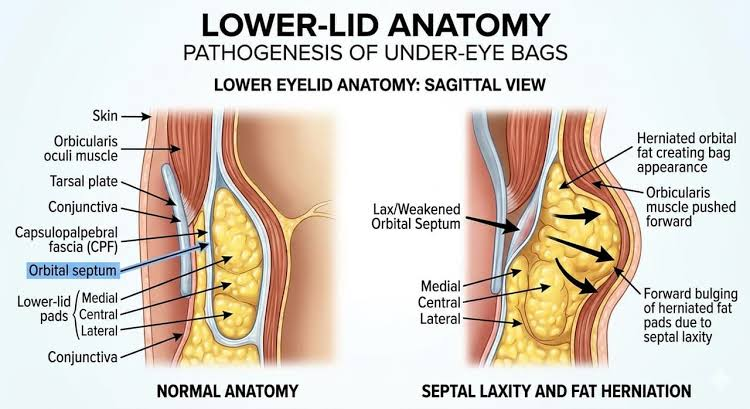
Under-eye bags are a common cosmetic concern characterized by swelling or puffiness beneath the lower eyelids. While often associated with fatigue, their development is primarily driven by structural changes in the skin, facial muscles, and deep tissue supports over time.
The Biological Process
The skin surrounding the eyes is the thinnest on the human body, measuring roughly 0.5 mm thick. Beneath this delicate layer lies a fibrous membrane called the orbital septum, which acts as a retaining wall to hold the eye’s protective fat pads in place within the eye socket (orbit).
Weakening of Structural Supports: As part of the natural aging process, collagen and elastin synthesis declines. This causes the lower eyelid skin to lose elasticity and thins the orbicularis oculi muscle.
Septal Laxity & Fat Prolapse: The orbital septum loses tensile strength and stretches outward. Without a firm barrier, the deep orbital fat pads (medial, central, and lateral) shift forward and push against the lower eyelid, creating a visible bulge.
Fluid Accumulation: Microcirculation and lymphatic drainage in the periorbital area can slow down, leading to localized fluid retention (edema) that exacerbates the volume of the herniated fat pads.
Key Contributing Factors
Genetics: Facial bone structure, eyelid anatomy, and structural weakness of the orbital septum are strongly inherited traits.
Fluid Retention: High sodium intake, hormonal fluctuations, and sleeping flat on one’s back can cause interstitial fluid to pool overnight, leading to morning puffiness.
Sun Damage & Lifestyle: UV exposure accelerates collagen degradation, while smoking impairs microcirculation, both hastening septal weakening and skin sagging.