
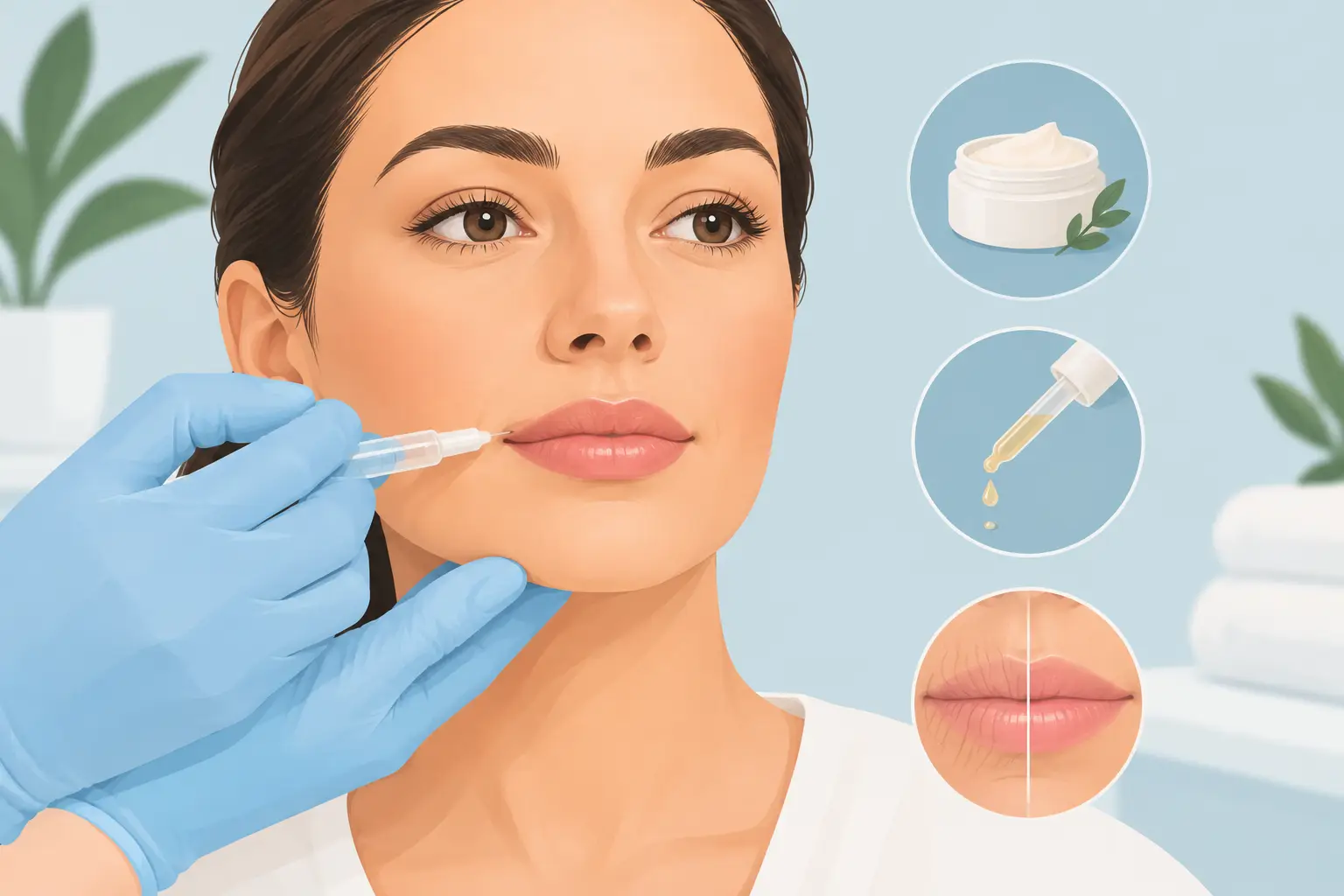
Vertical lip lines can make lipstick feather, give the mouth area a creased appearance, and make the face look tired even when the rest of the skin is well cared for. Knowing how to treat lip lines starts with identifying what is creating them: repetitive muscle movement, collagen loss, sun exposure, dehydration, or loss of support around the mouth. The right treatment is rarely one-size-fits-all.
Often called smoker’s lines or perioral lines, these fine vertical wrinkles can develop whether or not you smoke. They are common with natural aging, but they may also appear earlier in people who have had significant sun exposure, use straws frequently, purse their lips, or naturally have thinner skin around the mouth. A professional assessment can determine whether your lines are primarily dynamic, etched into the skin, or related to volume loss.
Why Lip Lines Form
The skin around the lips is thin and constantly in motion. Every smile, sip, conversation, and lip-pursing movement activates the circular muscle around the mouth. Over time, repeated folding can create lines that remain visible at rest.
Collagen and elastin decline with age, which means the skin does not rebound as smoothly after movement. At the same time, the lips and surrounding tissue can lose volume and structural support. This may make fine lines more noticeable and can contribute to lipstick bleeding beyond the lip border.
Sun exposure is another major factor. Ultraviolet damage breaks down collagen, particularly in the upper lip area, where many people miss sunscreen application. Smoking accelerates this process, but it is not required for perioral lines to form.
How to Treat Lip Lines Based on Their Cause
The most effective approach depends on the depth of the lines and the quality of the surrounding skin. For early, fine lines, skin renewal and prevention may be enough to create improvement. For deeper etched lines, combining treatments is often more effective than relying on a single procedure.
Start With Daily Protection and Skin Support
Home care will not erase established lip lines, but it can help prevent them from becoming more pronounced and support professional results. Apply broad-spectrum SPF 30 or higher to the area around the mouth every morning. A lip balm with sunscreen is useful for the lips themselves, especially when outdoors.
A gentle retinoid or retinol product may support cell turnover and collagen production over time, but the mouth area can be sensitive. Use a small amount, avoid applying directly on the lips, and introduce it gradually. If you experience persistent burning, peeling, or irritation, stop and ask a qualified provider for guidance.
Hydrating ingredients such as hyaluronic acid, ceramides, and peptides can improve the look of temporary dehydration lines. They do not replace lost collagen, but well-hydrated skin often appears smoother and reflects light more evenly.
Neuromodulator Injections for Repetitive Movement
When lip lines are driven by frequent pursing or overactivity in the muscles around the mouth, carefully placed wrinkle-relaxing injections may soften the motion that contributes to creasing. BOTOX® Cosmetic is one option used by trained injectors in small, precise doses.
This area requires a conservative technique. Too much product or placement that is not well suited to your facial anatomy can affect lip movement, speech, sipping, or smiling. The goal is not to freeze the mouth. It is to reduce excessive muscle pull while preserving natural expression.
Results typically develop gradually over several days and are temporary. Neuromodulator treatment is often most useful for lines that appear with movement, rather than deeply etched lines that remain visible when the face is relaxed.
Dermal Filler for Support and Fine Line Correction
Hyaluronic acid dermal fillers can improve lip lines by restoring subtle volume in the lips, reinforcing the lip border, or supporting the skin immediately around the mouth. The most natural results generally come from a measured approach. Treating the entire area with too much filler can create an overfilled appearance rather than smooth refinement.
For some patients, a very soft filler is placed superficially in individual lines. For others, the better solution is restoring structural support at the lip border or nearby areas of volume loss. Your provider should assess your lip shape, skin thickness, facial proportions, and the way your mouth moves before recommending filler.
Filler can provide immediate visible improvement, although mild swelling or bruising is possible. It is not appropriate for every type of line, and it does not replace resurfacing when the main concern is crepey texture or significant photodamage.
Microneedling and Radiofrequency for Collagen Remodeling
Microneedling creates controlled microchannels in the skin to stimulate the body’s natural repair response. When combined with radiofrequency energy, treatments such as Exion AI RF Microneedling can target deeper layers of the skin while supporting collagen remodeling around the mouth.
This option is particularly useful for patients with fine, etched lines and overall textural change. Improvements develop gradually as collagen production increases, so this is not an instant correction. A series of treatments may be recommended, depending on line depth and skin condition.
The trade-off is downtime and patience. Temporary redness, sensitivity, and mild swelling can occur after treatment. However, for patients who want to improve skin quality without adding volume, radiofrequency microneedling can be a valuable part of a comprehensive plan.
Fractional Resurfacing for Etched Lines and Texture
When lip lines are more deeply engraved into the skin, resurfacing may be the most direct way to improve their appearance. Fractional treatments create controlled zones of skin renewal, encouraging new collagen and a smoother surface. Exion FSR is one technology that may be considered for texture concerns in appropriate candidates.
Resurfacing is not simply a treatment for wrinkles. It addresses the quality of the skin itself, which is why it can help with fine creasing, roughness, and sun-related texture changes around the mouth. Recovery varies according to the treatment intensity and your skin’s sensitivity. Some patients experience several days of redness and flaking, while others may require longer social downtime.
Not every skin tone, medical history, or active skin condition is suited to the same resurfacing protocol. A proper consultation is essential to reduce the risk of prolonged irritation or pigmentation changes.
Why Combination Treatment Often Gives Better Results
Lip lines rarely have only one cause. A person may have repetitive muscle movement, diminished lip border support, and sun-damaged skin at the same time. In that situation, treating only the muscle or only the skin surface may provide partial improvement but leave other factors unaddressed.
A customized plan may combine conservative wrinkle-relaxing injections for movement, a small amount of filler for support, and collagen-stimulating treatment for skin texture. Treatments are often spaced out so the provider can see how the area responds and avoid overcorrecting. This step-by-step approach is especially valuable around the lips, where subtle changes can have a major effect on facial balance.
What to Avoid When Treating Lip Lines
Be cautious with aggressive exfoliation, strong at-home devices, and unverified topical products marketed as instant wrinkle erasers. The skin around the mouth is delicate, and irritation can make fine lines look more visible in the short term.
It is also wise to avoid choosing treatment based solely on before-and-after photos. A result that works for fuller lips, thicker skin, or a different facial structure may not be right for you. Injectable and energy-based treatments should be performed by experienced, qualified medical aesthetic professionals who can explain realistic outcomes, risks, and aftercare.
If you are pregnant, breastfeeding, have a history of cold sores, take blood-thinning medication, or have an active rash or infection around the mouth, disclose this before treatment. These details can affect timing, treatment selection, and preparation.
At Genesis Medi Clinic, a consultation for lip lines should focus on more than the wrinkle itself. The best plan considers lip movement, facial proportions, skin texture, and the amount of correction that will still look like you. Small, well-planned changes can restore a smoother, fresher appearance while keeping your expressions natural.