
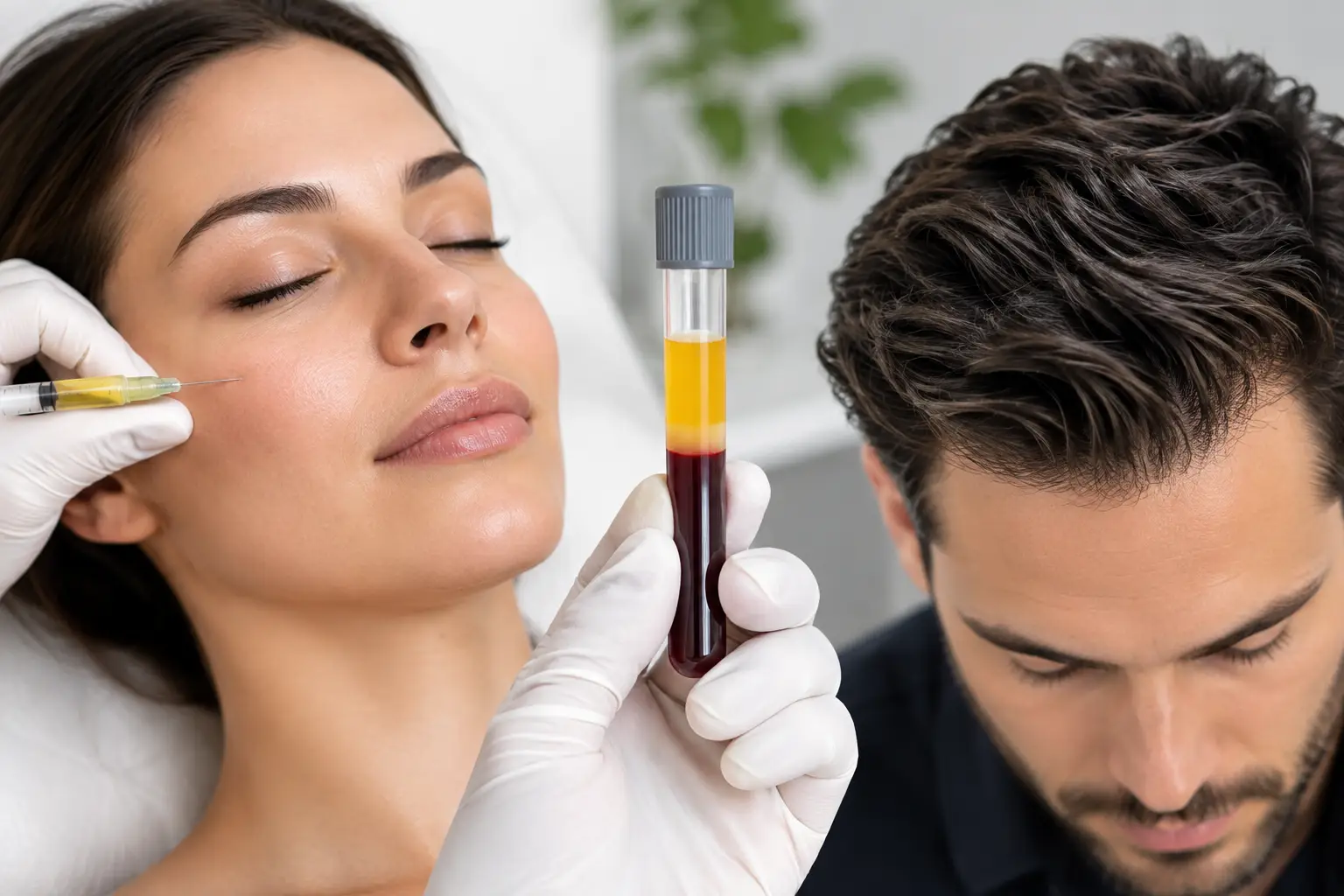
A vial of your own blood can become a targeted treatment for thinning hair, dull skin, fine lines, and acne scars. But how does PRP work, and why is it often paired with treatments such as microneedling? The answer is in platelets – small blood components that release signaling proteins involved in the body’s natural repair response.
PRP, or platelet-rich plasma, is not a filler and does not change facial movement like neuromodulator injections. It is a regenerative treatment that uses a concentrated portion of your own blood to support healthier tissue activity where it is placed. Results are gradual rather than instant, which makes proper assessment, treatment technique, and a realistic plan especially important.
What PRP Is Made Of
Whole blood contains red blood cells, white blood cells, plasma, and platelets. Platelets are best known for helping blood clot after an injury, but they also carry growth factors and other proteins that communicate with cells involved in tissue repair.
During a PRP appointment, a trained provider draws a small amount of blood, much like a routine blood test. The blood is placed in a centrifuge, which spins the sample to separate its components. The platelet-rich plasma layer is then collected for treatment.
The final product is not identical for every person. Platelet concentration can vary based on the preparation method, the individual’s blood composition, and the system used. This is one reason PRP should be approached as a medical aesthetic treatment, not a one-size-fits-all facial add-on.
How Does PRP Work in the Skin?
When PRP is introduced into the skin through injection or used with microneedling, its platelets release growth factors that signal the body’s repair processes. These signals may support collagen and elastin production, cell turnover, and blood supply within the treated area.
For facial rejuvenation, the goal is usually improved skin quality rather than dramatic volume. Patients may notice smoother texture, a healthier glow, refined-looking pores, and gradual softening of fine lines. PRP can also be a useful option for concerns around the under-eye area, where some people prefer a regenerative approach rather than adding filler.
Microneedling and PRP are frequently combined because they address skin renewal in complementary ways. Microneedling creates controlled microchannels in the skin, initiating a repair response. PRP can then be applied over the treatment area or delivered during the procedure, depending on the treatment plan. For acne scarring and uneven texture, a series of treatments is often more appropriate than a single session.
PRP is not designed to replace lost cheek volume, lift significantly sagging skin, or erase deep etched wrinkles on its own. In those situations, a customized plan may include treatments such as radiofrequency microneedling, skin tightening, neuromodulator injections, or dermal filler. The right choice depends on whether the primary concern is texture, laxity, muscle movement, volume loss, or pigmentation.
How PRP Supports Hair Restoration
PRP for hair restoration is typically injected into areas of thinning on the scalp. The intent is to support the environment around existing hair follicles. Growth factors in the platelet-rich plasma may encourage follicle activity and help improve the appearance of hair density, thickness, and shedding over time.
It is most commonly considered for people with early to moderate pattern-related thinning who still have active follicles. PRP cannot create follicles where none remain, and it is not a guaranteed solution for advanced hair loss. The cause of shedding also matters. Hormonal shifts, stress, nutritional deficiencies, certain medications, scalp conditions, and autoimmune concerns can all affect the hair cycle.
A careful consultation should come before treatment. If hair loss is sudden, patchy, associated with itching or scaling, or accompanied by other health changes, medical evaluation may be needed before an aesthetic treatment plan is appropriate.
What Happens During a PRP Treatment?
A PRP appointment begins with a discussion of your concern, health history, current medications, and goals. Photos may be taken to document the starting point, especially for hair restoration or scar treatment where progress develops gradually.
After the blood draw and centrifuge process, the treatment area is cleansed. A topical numbing cream may be used for procedures involving the face or scalp. PRP may be injected with a fine needle, placed into the skin with microneedling, or used in a combination approach.
Treatment time varies with the area and technique, but many appointments are completed within about an hour. Most patients can return to normal daily activity shortly afterward. Temporary redness, pinpoint bleeding, tenderness, swelling, or mild bruising can occur. Scalp treatments may leave the area feeling sensitive for a day or two.
Your provider will give specific aftercare instructions. In general, patients are asked to avoid touching the area unnecessarily, intense exercise for a short period when advised, and products or medications that may interfere with the treatment protocol. Because recommendations vary by treatment area and medical history, follow the instructions provided for your appointment rather than relying on generalized online advice.
When Will You See Results?
PRP works with biological processes that take time. After a facial PRP treatment, some people notice early radiance once initial redness settles. More meaningful improvements in texture and collagen support generally appear over several weeks to months.
Hair restoration also requires patience. Hair grows in cycles, so visible changes often take several months. A series of initial sessions is commonly recommended, followed by maintenance based on your response and goals. Taking consistent photos in the same lighting and parting pattern can provide a more honest view of progress than checking the mirror day to day.
The number of sessions depends on the concern, the treatment method, and your baseline condition. Acne scars may require a different schedule than under-eye rejuvenation, while hair thinning often benefits from a structured series and ongoing maintenance. A clinic that promises identical results or a fixed timeline for everyone is not accounting for how PRP actually works.
Who May Not Be a Good Candidate for PRP?
Because PRP uses your own blood, the risk of allergic reaction to the plasma itself is low. However, not everyone is a suitable candidate. Active skin infection, certain bleeding or platelet disorders, significant anemia, uncontrolled medical conditions, and some medications may affect whether treatment should proceed.
Pregnancy, breastfeeding, a history of keloid scarring, active acne flare-ups, or recent cosmetic procedures may also change the timing or method of treatment. Be open about supplements, prescription medications, prior treatments, and any relevant medical history. This information helps your provider protect your safety and set appropriate expectations.
PRP is generally well tolerated when performed with appropriate sterile technique, but every injectable or microneedling procedure carries potential risks. These can include bruising, swelling, infection, discomfort, temporary skin changes, and unsatisfactory results. Choosing a qualified provider and following aftercare guidance are practical parts of reducing avoidable risk.
Is PRP Worth It for Your Concern?
PRP is often a strong fit for patients who want gradual, natural-looking improvement in skin quality or early hair thinning without surgery. It can be particularly useful when the goal is to support collagen, improve texture, soften the appearance of acne scars, or strengthen an existing hair-restoration plan.
It may not be the best stand-alone answer for every concern. Deep folds caused by volume loss, pronounced skin laxity, stubborn pigmentation, or severe scarring may call for another treatment or a combination approach. At Genesis Medi Clinic, the most useful starting point is a consultation that identifies the actual cause of the concern before selecting a procedure.
PRP rewards patience: give the treatment time to work, track changes consistently, and choose a plan that matches what your skin or hair truly needs.