A face can look less defined for more than one reason. Skin may lose firmness, fat pads can shift, and the small muscles that support facial expression may lose tone over time. That is why the question, does Emface build facial muscle, matters. It addresses a different part of facial aging than treatments designed only to relax wrinkles, replace volume, or resurface skin.
Emface is a non-invasive treatment that pairs synchronized radiofrequency energy with High-Intensity Facial Electrical Stimulation, often called HIFES. The goal is to improve facial muscle tone while supporting skin firmness. For the right candidate, this combination can create a more lifted, rested, and naturally contoured appearance without needles or surgery.
Does Emface Build Facial Muscle or Just Tighten Skin?
Emface is designed to stimulate the facial muscles through repeated, controlled contractions. These contractions are far more intense and targeted than the facial movements you make during normal expression. In response, the treated muscles may improve in quality, tone, and density, helping provide more structural support beneath the skin.
So, yes, Emface can build facial muscle in the sense that it is intended to strengthen and improve the condition of selected facial muscles. It is not the same as building large or visibly bulky muscles through strength training. The objective is subtle support: better elevation through the cheeks, improved facial contour, and a more refreshed look rather than a dramatic change in facial size.
The treatment also uses radiofrequency to gently warm the skin and underlying tissue. This thermal energy supports collagen and elastin remodeling, which is why Emface is not solely a muscle-stimulation procedure. Muscle stimulation addresses one layer of facial aging, while radiofrequency addresses another.
Why Muscle Tone Matters in Facial Aging
Facial aging is often described as a skin problem, but the changes underneath the skin are just as relevant. When facial muscles lose tone, the cheeks can appear flatter, the lower face may look heavier, and the overall facial shape can seem less supported.
Improving muscle tone does not replace lost volume in every case. Someone with significant hollowing in the temples or midface may still benefit from dermal filler or other volumizing options. However, treating support and skin quality can be a valuable strategy for patients who want a non-surgical approach that does not rely on adding volume.
How Emface Works During a Treatment
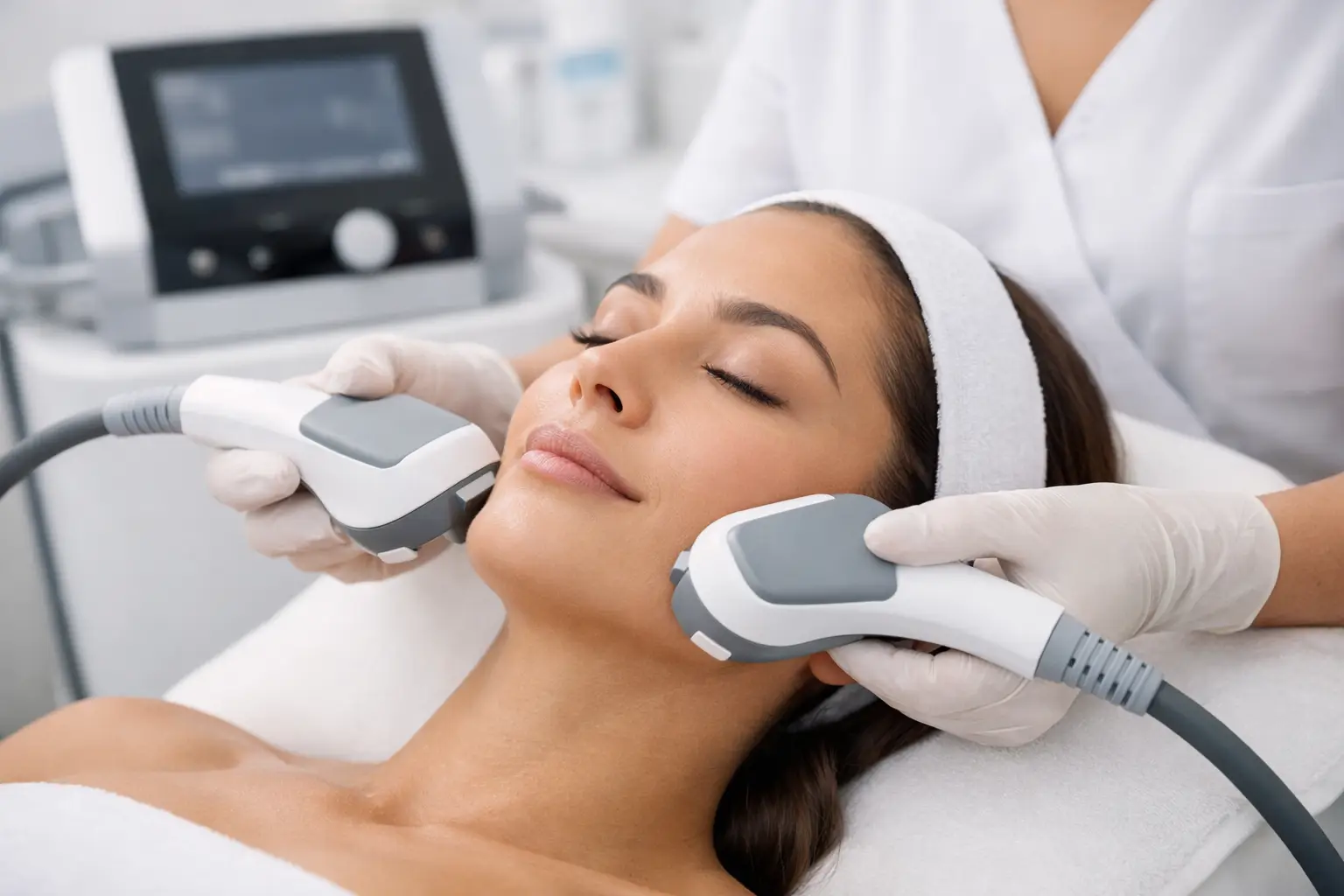
An Emface treatment uses applicators placed on specific areas of the face, commonly the forehead and cheeks. The applicators deliver radiofrequency and HIFES energy at the same time. Most patients describe the radiofrequency sensation as warmth, while HIFES creates strong but tolerable muscle contractions.
The muscles contract and release repeatedly during the session. There is no downtime, no needles, and no need to pause regular daily activities afterward. A typical appointment is relatively short, making it practical for patients with busy schedules who want a treatment that fits into a maintenance plan.
Most treatment protocols involve a series of sessions rather than a single appointment. Your provider will recommend the number and spacing of treatments based on your facial anatomy, degree of laxity, and cosmetic goals. The standard approach is often four sessions, scheduled several days apart, but a personalized recommendation is more useful than a one-size-fits-all schedule.
What Changes Can You Realistically Expect?
Emface results develop gradually. Some patients notice an early feeling of firmness or a more awake appearance, but collagen remodeling and changes in muscle tone take time. Improvements are commonly assessed several weeks after the treatment series, with results continuing to develop over the following months.
Potential changes may include a subtle lift through the cheeks, smoother-looking skin, improved facial definition, and a more open appearance around the brow area. The outcome should look like you, not like a different face. That is a key advantage for people who want facial rejuvenation without an overfilled or overly altered result.
Results vary. Age, baseline skin laxity, facial volume, lifestyle factors, and the strength of the underlying facial structures all influence the response. Patients with mild to moderate laxity and early changes in facial definition are often strong candidates. Those with advanced skin laxity or substantial volume loss may need a combined treatment plan to achieve a meaningful correction.
Emface Compared With Other Facial Treatments
Emface is not a replacement for every aesthetic procedure. It serves a specific role: improving muscle support and skin quality without injections or surgery.
Neuromodulators such as BOTOX Cosmetic work differently. They temporarily relax selected muscles to soften expression lines, particularly in areas where repetitive movement creates wrinkles. Emface stimulates muscles rather than relaxing them. In some treatment plans, the two approaches can complement one another, but placement, timing, and goals must be evaluated carefully by an experienced provider.
Dermal fillers restore or enhance volume. They may be appropriate when cheeks, temples, or other areas have become hollow or flattened. Emface does not function as a filler, but improving muscle tone and skin firmness may reduce the amount of volume correction a patient needs or help create a more balanced overall result.
Skin tightening technologies can improve laxity by encouraging collagen remodeling. Emface adds the muscle-stimulation component, which makes it particularly relevant when a patient is concerned about both skin looseness and declining facial support. Microneedling, radiofrequency treatments, and ultrasound-based tightening may also be considered when texture, pores, scars, or deeper laxity are part of the concern.
Who Is a Good Candidate for Emface?
A good candidate is usually someone who wants a non-surgical option for early facial sagging, reduced cheek definition, fine lines, or a tired-looking appearance. It may be especially appealing to patients who prefer to avoid needles or who want to improve facial tone without adding filler.
Emface can be used by adults of different ages, but expectations should match the degree of aging present. A patient in their 30s or 40s noticing early loss of contour may pursue Emface as a proactive treatment. A patient in their 50s or 60s may still benefit, although more comprehensive correction could require combining it with other options.
A consultation is essential if you have metal implants in or near the treatment area, implanted electronic devices, certain medical conditions, active skin concerns, or if you are pregnant. Your provider should review your health history, assess your facial movement and structure, and determine whether Emface is appropriate before treatment begins.
How to Make Your Treatment Plan More Effective
The best results come from treating the concern, not simply choosing the newest technology. A thorough facial assessment should examine skin thickness, laxity, volume distribution, muscle activity, facial symmetry, and the areas that bother you most.
For example, a patient whose main concern is heavy jowling may need a different strategy than someone whose cheeks look less lifted but whose skin remains relatively firm. Similarly, someone with deep etched wrinkles may need skin resurfacing or targeted injectable treatment in addition to muscle stimulation.
At Genesis Medi Clinic, treatment planning is based on visible concerns and facial anatomy rather than a preset package. Emface may stand alone for patients seeking gentle, natural-looking improvement, or it may be integrated into a broader plan for contour, firmness, texture, or volume correction.
Is Emface Worth It for Facial Rejuvenation?
Emface can be worth considering when your goal is a gradual, non-invasive improvement in facial support and skin firmness. Its value is not in producing an instant, dramatic transformation. It is in addressing the muscle component of facial aging, an area that many skin-only treatments do not directly target.
The trade-off is patience. A surgical lift may produce more substantial correction for advanced laxity, while fillers can create immediate volume. Emface offers a different path: no incisions, no needles, no recovery period, and results that emerge progressively. For patients who prioritize subtle refinement and natural facial movement, that trade-off can be worthwhile.
If your face looks less lifted than it once did, start with an assessment rather than a guess. Understanding whether the issue is muscle tone, skin laxity, volume loss, or a combination of all three is the clearest path toward a treatment plan that feels right for your face.