
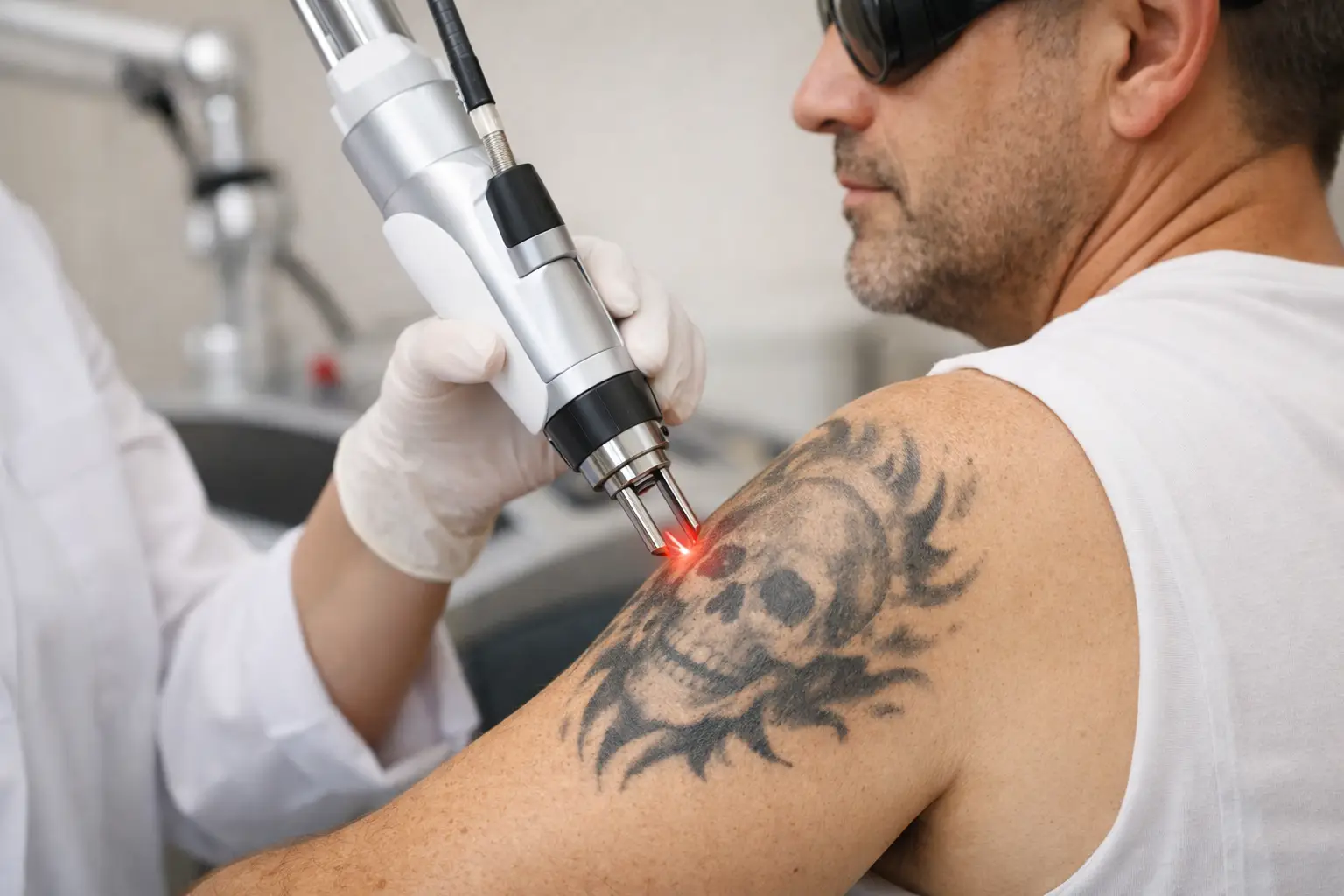
A tattoo that felt permanent at 22 can look very different at 42. The good news is that can laser remove old tattoos is not simply a yes-or-no question. In many cases, older tattoos respond very well to professional laser treatment because some of the pigment has already faded naturally. However, the final result depends on the ink, the tattoo itself, your skin, and the treatment approach.
At Genesis Medi Clinic, tattoo removal is approached as a customized correction plan, not a one-size-fits-all service. A proper consultation helps determine how likely the tattoo is to clear, how many sessions may be needed, and what can be done to protect the surrounding skin throughout the process.
Why Older Tattoos May Respond Well to Laser Treatment
Your immune system begins working on tattoo ink as soon as the tattoo is placed. It cannot eliminate the pigment particles on its own, which is why the tattoo remains visible, but it can gradually carry away small amounts over many years. This is why an older tattoo may look softer, less saturated, or slightly blurred around the edges.
Laser tattoo removal builds on that process. The laser delivers highly targeted energy into the ink, breaking pigment into smaller particles. Once the particles are smaller, the body can gradually clear them through its natural immune response between appointments.
Age can be an advantage when the ink has already lightened. It is not a guarantee, though. A 15-year-old professional tattoo with dense black ink can still require several treatments, while a newer tattoo with lighter ink and less pigment saturation may respond faster. The date of the tattoo is only one part of the clinical picture.
Old Does Not Always Mean Easy to Remove
Some older tattoos are challenging because older inks can be deeply placed, heavily layered, or made with pigment blends that react unpredictably. Cover-up tattoos are often more complex as well. They may contain several layers of ink, including a newer, darker design placed over a faded original tattoo.
Amateur tattoos sometimes clear more efficiently because the pigment may be less concentrated and placed less consistently in the skin. Professional tattoos often contain denser, more stable ink. Neither category can be assessed accurately from age alone.
Can Laser Remove Old Tattoos Completely?
Can laser remove old tattoos completely? Many tattoos can be significantly faded or fully cleared, but no ethical provider should promise complete removal before evaluating the tattoo in person. Some inks, especially black and certain darker shades, tend to respond very well. Other colors may take longer or leave behind a faint trace of pigment.
The realistic goal depends on why you are seeking treatment. If you want the tattoo gone, the plan focuses on the greatest safe clearance possible. If you are preparing for a cover-up, you may not need complete removal. Strategic fading can create a cleaner canvas for a tattoo artist while reducing the need for a dark, oversized replacement design.
Several factors influence your treatment outcome:
- Ink color and composition: Black, dark blue, and dark gray often respond predictably. Green, turquoise, yellow, white, and some red pigments can be more resistant or require a different treatment strategy.
- Ink density and layering: Solid, saturated areas and cover-up work contain more pigment for the laser and immune system to address.
- Tattoo location: Tattoos closer to the heart, such as those on the upper body, may clear faster than tattoos on the hands, feet, ankles, or lower legs where circulation is often less active.
- Skin tone and skin condition: Treatment settings must be selected carefully to break up ink while minimizing the risk of unwanted pigment changes in the surrounding skin.
- Your healing response: Sleep, overall health, smoking status, sun exposure, and how closely you follow aftercare can all influence the pace of clearing.
What a Professional Laser Treatment Plan Looks Like
Tattoo removal is a process measured in weeks and months, not days. Treatments are usually spaced apart to give the skin time to recover and the body time to remove disrupted pigment. Treating too frequently does not force ink to disappear faster. It can increase irritation without allowing enough time for meaningful clearance between sessions.
During a consultation, the provider should assess the tattoo’s colors, size, age, depth, location, and whether it has been retouched or covered. Your medical history, current medications, history of scarring, and previous reactions to cosmetic treatments also matter. This information guides safe settings and helps establish realistic expectations.
Most clients need a series of sessions. A small, faded black tattoo may require fewer appointments than a large multicolored sleeve or a dense cover-up. It is common for progress to be visible gradually rather than dramatically after one treatment. Photos taken before each session can be helpful because tattoo fading is easier to judge over time than from day to day.
Why Advanced Pico Technology Matters
Modern tattoo removal technology is designed to deliver energy in extremely short pulses. Devices such as Cynosure PicoSure use picosecond energy to target pigment efficiently while limiting unnecessary heat exposure to surrounding tissue. This makes advanced laser technology particularly valuable for treating a broad range of tattoo colors and for managing treatments with precision.
The right device is important, but the provider’s judgment is equally important. Energy settings should be tailored to the ink and the skin’s response, then adjusted as the tattoo fades. A treatment plan that looks good on paper but ignores your individual healing pattern is not truly personalized.
What to Expect After Each Session
Immediately after a laser tattoo removal appointment, the treated area may look white or frosted. This response is temporary. Redness, swelling, tenderness, and a sensation similar to a mild sunburn are also common for a short period after treatment.
Some clients experience pinpoint bleeding, blistering, or scabbing. These can be normal healing responses, but they should be managed carefully. Do not pick, scratch, or prematurely remove scabs. Doing so can increase the risk of scarring or pigment changes.
Keep the area clean, follow the aftercare instructions provided by your clinic, and protect the skin from sun exposure. Tanned or irritated skin may need time to settle before treatment, since protecting the skin is part of achieving a more even cosmetic result. Contact your provider promptly if you notice increasing pain, spreading redness, unusual drainage, or signs of infection.
Safety Matters More Than Fast Results
The safest tattoo removal plan is not necessarily the shortest one. Aggressive settings or poorly timed sessions can raise the risk of burns, scarring, or changes in skin pigmentation. This is especially relevant for clients with deeper skin tones, a tendency toward raised scars, or tattoos in areas that heal slowly.
A qualified medical aesthetics clinic will prioritize skin assessment, appropriate laser selection, conservative treatment intervals, and careful aftercare guidance. The goal is to reduce unwanted ink while keeping the surrounding skin healthy and as even in tone and texture as possible.
If you are considering tattoo removal in Richmond Hill or the Greater Toronto Area, bring clear expectations to your consultation. Ask what colors are present, whether the tattoo appears layered, what degree of fading is realistic, and how the treatment plan will be adjusted if your skin or ink responds differently than expected.
An old tattoo does not have to remain a permanent decision simply because it has been there for years. With appropriate technology, patient treatment spacing, and a plan designed around your skin and ink, meaningful fading can be a practical next step toward clear skin or a better cover-up.