A lower face that looks tired, downturned, or stern even when you feel well-rested can be frustrating. Marionette lines, the creases that extend from the corners of the mouth toward the chin and jawline, often create that effect. The best treatments for marionette lines are not one-size-fits-all because these folds can be caused by volume loss, repetitive muscle movement, skin laxity, bone structure, or a combination of each.
The most effective plan starts with an assessment of the entire lower face. Treating only the visible line can make the area look overfilled or unnatural. A medically informed provider looks at cheek support, chin projection, jawline definition, skin quality, and the muscle activity around the mouth before recommending injectable, collagen-stimulating, or skin-tightening options.
Why Marionette Lines Develop
Marionette lines become more noticeable as the facial tissues lose structural support. Over time, collagen and elastin production decline, fat pads shift downward, and the skin may become thinner and less resilient. Volume loss through the cheeks and around the mouth can leave the lower face looking heavier, while early jowling can deepen the shadow beside the chin.
Muscle movement also matters. The depressor anguli oris muscles pull the corners of the mouth downward. In some people, this repeated downward pull contributes to a sad or tense expression and makes the folds appear deeper. Genetics, sun exposure, smoking, weight changes, and natural facial anatomy can all affect how early and how prominently marionette lines appear.
Best Treatments for Marionette Lines
Dermal fillers for structural support
Dermal filler is often the most direct treatment when marionette lines are caused by volume loss, hollowness, or a deep fold. Hyaluronic acid fillers can be placed strategically in the marionette area, but the best correction may begin higher in the face. Supporting the cheeks, pre-jowl area, chin, or jawline can improve facial balance and reduce the downward pull that contributes to these lines.
This approach is more refined than simply filling a crease. An experienced injector considers where the face has lost support and uses conservative placement to soften shadows while preserving normal movement around the mouth. Results are visible immediately, though mild swelling or bruising can occur. Depending on the product used, treatment area, and individual metabolism, results may last from several months to more than a year.
Fillers are especially useful for moderate lines with visible volume loss. They may not be the right standalone choice when the primary concern is loose skin or pronounced jowling. In those cases, adding collagen stimulation or skin tightening can produce a more balanced outcome.
Wrinkle relaxers for a downturned mouth
BOTOX Cosmetic or another neuromodulator may help when strong downward muscle activity is making the mouth corners look pulled down. Small, precise injections can relax the depressor anguli oris muscles, reducing the downward tension around the mouth. This does not fill a deep crease, but it can soften the expression and complement filler treatment.
Results typically develop over several days and generally last about three to four months. Placement requires skill because the lower face contains muscles involved in speaking, eating, and smiling. A careful assessment is essential to ensure treatment supports natural expression rather than affecting it.
Collagen-stimulating treatments for gradual improvement
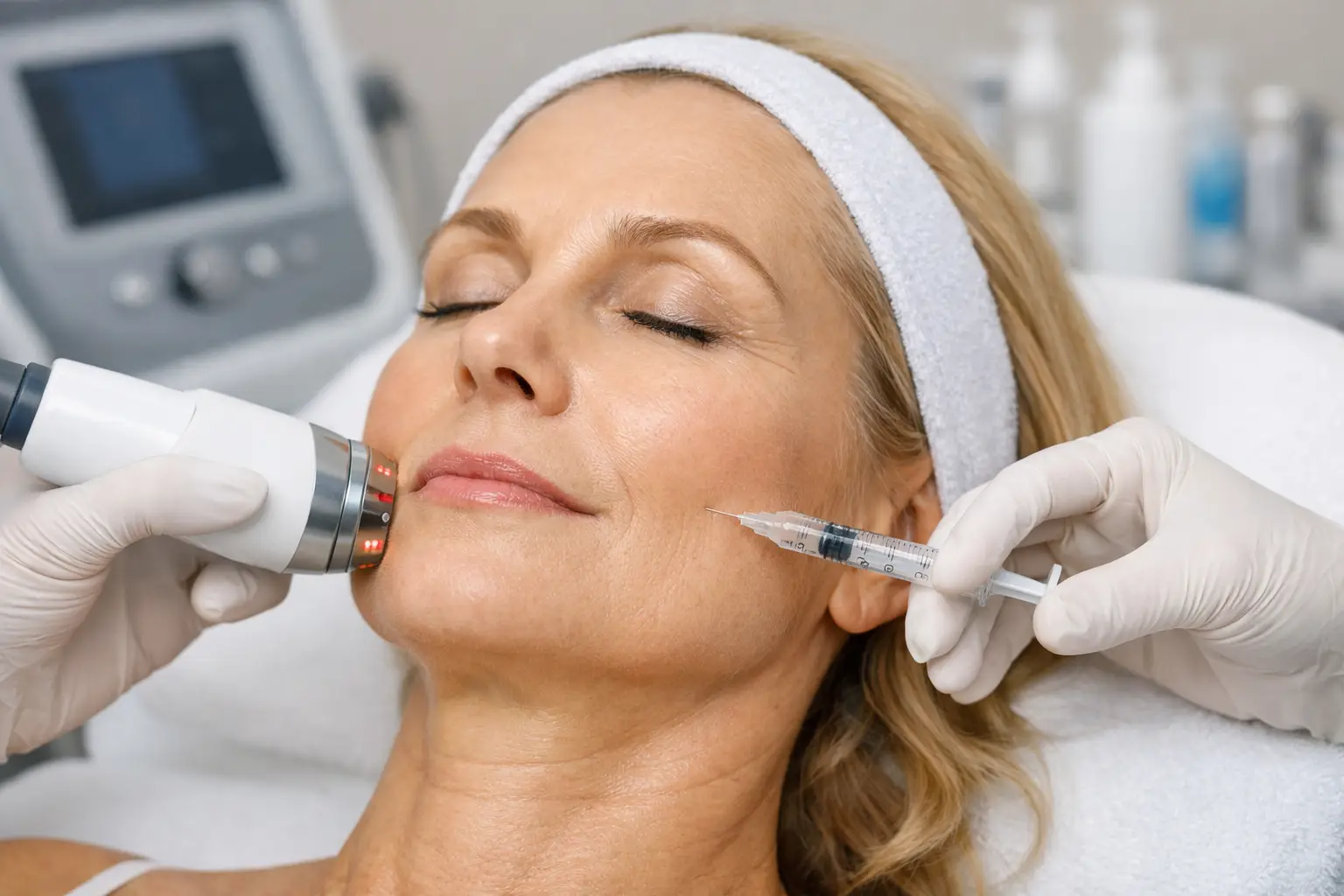
If the skin around the lower face feels thinner, less firm, or more crepey, collagen stimulation may be an important part of the plan. Treatments such as radiofrequency microneedling create controlled micro-injuries and deliver heat into deeper layers of the skin, encouraging the body to produce new collagen over time. Exion AI RF Microneedling can be considered for patients who want to improve skin texture, firmness, and fine lines without surgery.
This treatment is not designed to replace the volume created by filler. Instead, it improves the quality and resilience of the skin surrounding the folds. Most patients need a series of sessions, with changes developing gradually over several weeks to months as collagen remodeling occurs.
PRP may also be used in selected treatment plans to support skin quality and recovery. Because results depend on the condition of the skin, the degree of laxity, and the treatment protocol, a consultation is the best way to determine whether it adds meaningful value to your plan.
Skin tightening for early laxity and lower-face descent
When marionette lines are linked to mild or moderate skin laxity, non-surgical tightening treatments can help improve lower-face support. Sofwave, Thermage CPT, and Exion RF and Target Ultrasound Skin Tightening use controlled energy to heat targeted tissue and stimulate collagen production beneath the skin surface.
These technologies can be appropriate for people who notice early sagging, soft jawline definition, or lower-face heaviness but do not want surgery. The results are gradual, not immediate, because the body needs time to remodel collagen. Some patients see improvement after one treatment, while others benefit from a series or a maintenance schedule based on their skin condition and goals.
Skin tightening works best when there is enough natural tissue support to respond to collagen stimulation. If there is significant loose skin or advanced jowling, non-surgical treatments can improve quality and contour but may not provide the degree of lifting achieved through surgical facial rejuvenation. Clear expectations are part of good treatment planning.
Facial muscle stimulation for contour support
Emface may be considered when lower-face aging is accompanied by reduced muscular support and early loss of facial definition. By combining synchronized facial muscle stimulation with radiofrequency energy, it is designed to address muscle tone and skin quality without needles. It is not a direct replacement for filler in a deep marionette fold, but it may be useful within a broader strategy focused on facial support and contour.
This option is generally suited to patients seeking gradual improvement and ongoing maintenance. It can be particularly appealing for those who prefer non-injectable treatments or want to extend the results of an existing injectable plan.
Why Combination Treatment Often Looks More Natural
Marionette lines rarely have a single cause, which is why combination treatment often delivers the most natural result. For example, filler may restore support through the cheeks or pre-jowl area, a wrinkle relaxer may reduce the downward pull at the mouth corners, and radiofrequency treatment may improve the skin’s firmness over time.
The right combination depends on what your face needs now, not on what is trending. A patient in their early 30s with subtle mouth-corner pull may need a very different approach than someone in their 50s with volume loss, jowling, and thinning skin. Conservative, staged treatment is often preferable to trying to correct every concern in one appointment.
What to Expect From a Professional Consultation
A quality consultation should focus on facial anatomy, not just the line you want erased. Your provider should assess your lower-face movement, skin thickness, existing volume, asymmetry, and degree of laxity. You should also discuss previous injectables, medical history, allergies, medications, and whether you are pregnant or breastfeeding, as these factors can affect treatment eligibility.
At Genesis Medi Clinic in Richmond Hill, a customized plan can combine injectable rejuvenation with advanced skin-tightening technology based on your anatomy and comfort level. The goal is not to create a frozen or overfilled appearance. It is to restore proportion, soften harsh shadows, and help your lower face look refreshed while still looking like you.
Ask about expected downtime, maintenance intervals, total treatment cost, and what type of result is realistic for your current skin condition. Injectable treatments should always be performed by qualified medical professionals who understand facial anatomy and can discuss both common effects, such as temporary swelling or bruising, and uncommon but serious risks.
Marionette lines do not need to be treated aggressively to look better. The most successful plan is usually one that respects your natural facial structure, addresses the cause of the folds, and leaves room for gradual refinement as your skin changes over time.