
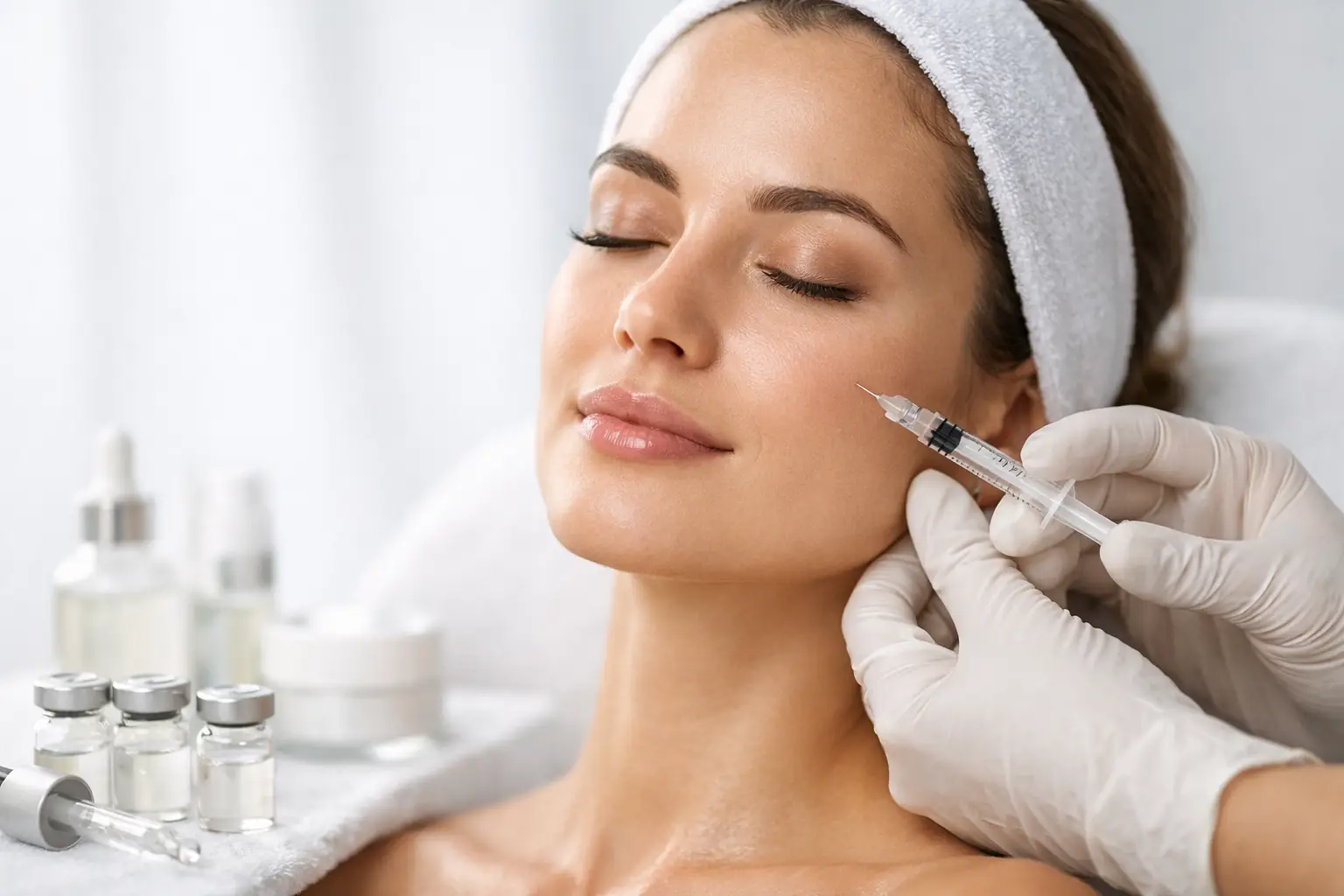
Dullness that returns quickly after a facial, fine lines that become more visible with dehydration, and makeup that settles into texture can point to one issue: the skin needs support below the surface. Skin boosters are injectable treatments designed to improve hydration, softness, and overall skin quality without changing your facial structure.
They are not meant to create dramatic volume or reshape the face. Instead, they can help the skin look more refreshed, smoother, and better conditioned over time. For many patients, that makes them a valuable option between skincare treatments and traditional dermal filler.
What Are Skin Boosters?
Skin boosters are typically made with hyaluronic acid, a naturally occurring substance that attracts and holds water in the skin. Unlike a volumizing filler, a skin booster is placed more superficially and distributed across an area of concern to improve the skin’s moisture balance and texture.
The goal is skin quality. Depending on the product selected and your treatment plan, skin boosters may help improve crepey texture, dehydration lines, uneven radiance, and early signs of aging. They are commonly used on the cheeks, lower face, neck, décolletage, and hands.
Some patients describe the result as looking more rested rather than “done.” That is an appropriate expectation. A successful treatment should support a healthy-looking complexion while preserving your natural features.
Skin Boosters vs. Dermal Fillers
Although both treatments may use hyaluronic acid, they serve different purposes. Dermal fillers are selected to restore volume, improve contour, or provide structural support in areas such as the cheeks, lips, chin, jawline, or under-eye region.
Skin boosters do not replace lost facial volume in the same way. They are better suited to concerns involving hydration and surface quality. If your primary concern is hollow cheeks, a weak chin, or deeper folds caused by volume loss, filler or another facial-contouring treatment may be more appropriate. If your skin looks dry, tired, or finely textured despite a consistent skincare routine, a skin booster may be the better match.
In many personalized treatment plans, the two are used for different goals. Structural correction may address facial support, while skin boosters improve the quality of the skin over that structure.
What Concerns Can Skin Boosters Treat?
Skin boosters are often considered when the face looks less luminous, feels dehydrated, or has fine textural changes that topical products cannot fully correct. They may be helpful for early fine lines, rough texture, enlarged-looking pores, and a lack of radiance.
They can also be useful for patients who want subtle rejuvenation but are not looking for visible volume enhancement. This includes younger adults focused on prevention as well as adults noticing that their skin is becoming less resilient with age.
Results depend on the underlying cause of the concern. For example, dehydration lines may respond well to skin hydration support, but deep etched wrinkles caused by repeated muscle movement may require wrinkle-reduction injections. Acne scars, significant pigmentation, and pronounced laxity may need a different approach, such as microneedling, laser treatment, RF microneedling, or skin-tightening technology.
A clinical assessment is important because several concerns can look similar in the mirror. A textured complexion may involve dryness, congestion, scarring, sun damage, or loss of collagen. Treating the correct cause is what makes a treatment plan efficient.
What Happens During a Skin Booster Appointment?
Your appointment should begin with a consultation that reviews your concerns, treatment history, medical considerations, and desired level of improvement. Your provider will assess the areas that would benefit from treatment and determine whether a skin booster is appropriate on its own or as part of a broader skin-rejuvenation plan.
The skin is cleansed before a series of small injections are placed across the treatment area. Depending on the product and area treated, a fine needle or cannula may be used. Topical numbing may be offered to improve comfort.
Treatment time is generally short, but the plan should never be rushed. Precise placement, appropriate product selection, and conservative dosing all matter. Your provider may recommend a series of sessions rather than a single appointment, especially when treating diffuse dehydration or texture concerns.
Immediately afterward, small raised points, mild redness, tenderness, or swelling can occur at the injection sites. These effects are usually temporary. You may be asked to avoid strenuous exercise, heat exposure, alcohol, and facial massage for a short period, based on your provider’s aftercare instructions.
When Will You See Results?
Some patients notice improved hydration and glow within days, but skin boosters are not an instant transformation treatment. The skin needs time to integrate the product and respond to the treatment. Improvements in smoothness, radiance, and fine dehydration lines often develop gradually.
The longevity of results varies by product, treatment area, skin condition, lifestyle, and maintenance schedule. Sun exposure, smoking, dehydration, stress, and an inconsistent skincare routine can all affect how long the skin maintains its improved appearance.
Many patients benefit from an initial treatment series followed by maintenance appointments. The right interval is individual. A patient with significant dryness or early texture concerns may need a different schedule than someone using skin boosters for ongoing skin maintenance.
Is There Downtime?
Most people return to normal daily activities shortly after treatment. However, visible redness, swelling, bruising, or small injection marks are possible, particularly in sensitive areas. If you have an important event, it is sensible to schedule treatment with enough time for your skin to settle.
As with any injectable treatment, there are risks. These can include bruising, tenderness, swelling, infection, allergic reaction, and unevenness. More serious complications are uncommon but require prompt assessment. Treatment should be performed by a qualified medical aesthetics provider who understands facial anatomy, product-specific protocols, and proper complication management.
Be transparent during your consultation about medications, supplements, allergies, pregnancy or breastfeeding status, active skin infections, and previous cosmetic procedures. Certain situations may mean treatment should be postponed or that another option is safer.
Building a Plan Around Skin Quality
Skin boosters work best when they are part of a realistic plan, not a substitute for every other aspect of skin health. Daily sunscreen, a well-matched home skincare routine, and appropriate professional treatments protect and extend the results you invest in.
For some patients, combining a skin booster with medical-grade skincare is enough to achieve a fresher appearance. For others, a more comprehensive plan may address several concerns at once: skin boosters for hydration, neuromodulator injections for expression lines, RF microneedling for texture, or laser treatments for pigmentation.
The correct combination depends on what you see in your skin and what is causing it. More treatment is not automatically better. A focused plan that targets the concerns most likely to improve can produce a more natural, balanced result.
For patients in Richmond Hill and the Greater Toronto Area, a professional consultation can clarify whether your concern is primarily hydration, volume loss, texture, laxity, or pigmentation. Once the cause is clear, choosing the right treatment becomes much more straightforward.
If your goal is skin that looks smoother, more hydrated, and quietly refreshed, skin boosters may be a practical next step. Start with an assessment that puts your skin concerns, timeline, and desired result at the center of the plan.