
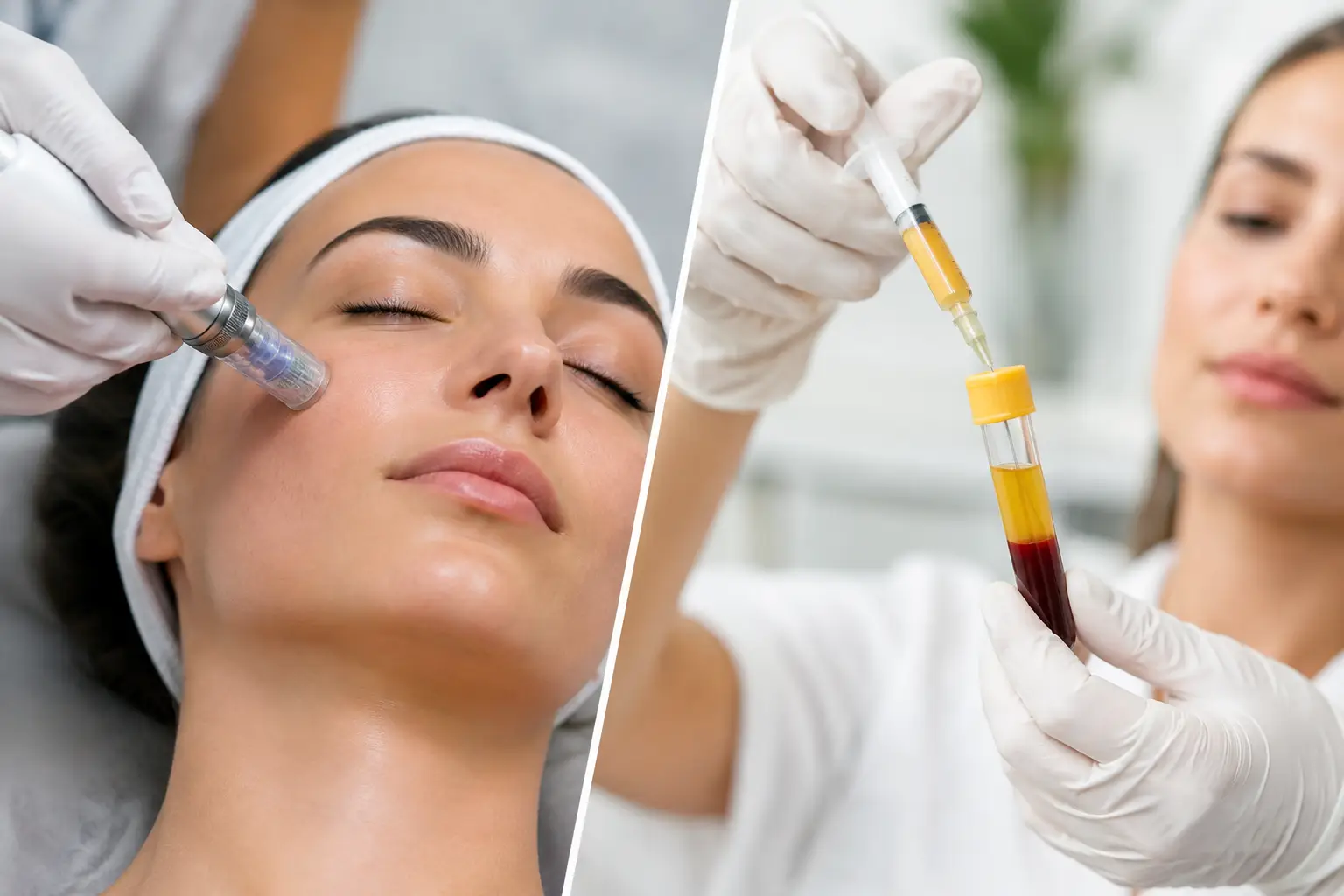
A treatment can sound promising and still be the wrong fit for your specific concern. When comparing RF microneedling versus PRP, the most useful question is not which option is better overall. It is which one addresses the depth, location, and cause of the issue you want to correct – whether that is acne scarring, enlarged pores, early laxity, uneven texture, fine lines, or thinning hair.
Both treatments support natural rejuvenation without surgery, but they work in distinctly different ways. RF microneedling uses controlled needling and radiofrequency energy to remodel skin from within. PRP uses concentrated components from your own blood to support healing and tissue renewal. In some cases, they can be combined. In others, choosing the correct treatment first prevents disappointment and unnecessary downtime.
RF Microneedling Versus PRP: The Core Difference
RF microneedling creates tiny, controlled channels in the skin while delivering radiofrequency energy below the surface. The needles reach a selected depth, and the energy creates focused heat within the deeper layers of the skin. This process is designed to stimulate collagen remodeling, improve tissue firmness, and refine uneven texture.
PRP, or platelet-rich plasma, is prepared from a small sample of your blood. After processing, the platelet-rich portion is applied or injected into the treatment area, depending on the concern and treatment plan. Platelets contain growth factors that support the body’s repair response. PRP is often used for facial rejuvenation, under-eye quality, and hair restoration.
The distinction matters. RF microneedling is primarily a structural skin treatment. PRP is a regenerative treatment that supports healing and cellular activity. A person with deeper acne scars and laxity may need the controlled remodeling produced by RF energy. Someone concerned about early hair thinning may be a stronger candidate for PRP-based treatment.
When RF Microneedling May Be the Better Choice
RF microneedling is often selected when the concern involves skin texture, collagen loss, or visible structural changes. It can be an effective option for acne scars, enlarged pores, rough texture, crepey skin, fine lines, and mild to moderate skin laxity. Because radiofrequency energy is delivered beneath the skin surface, the treatment can target deeper remodeling without relying on aggressive surface resurfacing.
For acne scarring, the depth and pattern of the scars matter. Rolling scars and some boxcar scars may respond well to a series of RF microneedling treatments because the procedure encourages collagen production in the areas where scar tissue has altered the skin’s architecture. Deep, sharply defined scars may require a broader plan that includes other corrective methods.
RF microneedling can also be useful for patients noticing early loss of firmness in the lower face, jawline, neck, or around the eyes. Results develop gradually as collagen remodeling occurs. This is not an instant volumizing treatment, and it does not replace dermal filler where volume loss is the main issue. Its strength is improving the quality, density, and firmness of the skin itself.
At Genesis Medi Clinic, Exion AI RF Microneedling can be customized by treatment depth and energy settings. That level of planning is important because treating thin under-eye skin is not the same as treating acne scars on the cheeks or texture on the neck.
What to Expect After RF Microneedling
Most patients experience temporary redness, warmth, and mild swelling after treatment. Pinpoint marks or a sandpaper-like texture may also be visible for a short period. Social downtime is commonly a few days, although healing varies with treatment intensity and individual skin sensitivity.
A series is usually recommended rather than one appointment. Collagen changes take time, so improvements may continue to develop over several weeks after each session. Patients should protect the skin from sun exposure and follow post-treatment instructions carefully to support proper recovery.
When PRP May Be the Better Choice
PRP is particularly relevant when the goal is to encourage natural repair without adding volume or changing facial contours. It may be used to improve overall skin quality, support recovery after certain procedures, and address areas where skin looks tired or thin. Under the eyes, PRP may be considered for concerns such as crepey texture and a dull appearance, although it will not correct every cause of dark circles or eye bags.
PRP is also widely used in treatment plans for hair thinning. When hair follicles are still active, PRP may help support healthier growth cycles and improve the appearance of thinning hair over time. It tends to be more appropriate for early to moderate thinning than areas where follicles are no longer producing hair.
For facial concerns, PRP can be injected or used alongside microneedling. It is not a substitute for wrinkle relaxers when expression lines are the concern, and it does not create the immediate lift that a filler can provide. Its appeal is subtler: gradual improvement in skin vitality, texture, and tissue quality using a product derived from your own blood.
What to Expect After PRP
PRP appointments generally involve blood collection, processing, and application or injection. Mild swelling, redness, bruising, or tenderness can occur, especially with injectable PRP. Recovery is often manageable, but the treated area may need a few days to settle before an important event.
Results are gradual and variable. Your age, skin condition, hormones, health history, lifestyle, and the severity of the concern can all influence the outcome. Hair treatment plans commonly involve multiple sessions followed by maintenance appointments, since hair growth occurs in cycles.
Can RF Microneedling and PRP Be Combined?
Yes. Combining RF microneedling with PRP can make sense for patients focused on skin texture, acne scars, and overall skin quality. RF microneedling provides the controlled collagen-stimulating treatment, while PRP may support the body’s recovery process. This combination is not automatically necessary for every patient, but it can be valuable when the skin needs both structural remodeling and regenerative support.
The best sequence depends on the treatment area and the concern. PRP can be applied topically after microneedling or incorporated into a planned series. A qualified provider should determine whether the combination is appropriate for your skin, particularly if you have active acne, inflammation, a history of pigmentation concerns, or a medical condition that may affect healing.
How to Choose Based on Your Primary Concern
If your main concern is acne scarring, enlarged pores, rough texture, or mild laxity, RF microneedling is often the more direct starting point. It addresses the collagen framework that contributes to these visible issues.
If your concern is thinning hair, PRP is generally the more relevant option. For delicate facial areas, tired-looking skin, or a desire for natural regenerative support, PRP may also be considered as part of a broader plan.
If you have both texture concerns and signs of depleted skin quality, a combined approach may offer more value than choosing one treatment in isolation. The right recommendation should account for your skin type, previous treatments, tolerance for downtime, timeline, and budget. It should also be realistic about what each procedure can and cannot correct.
Questions Worth Asking at Your Consultation
Ask what concern is being treated at the tissue level, not only what treatment is being recommended. You should understand whether the goal is collagen remodeling, healing support, volume restoration, muscle relaxation, or a combination of these.
It is also reasonable to ask how many sessions are likely needed, when results should become visible, what downtime is expected, and whether a different treatment would better address your concern. A personalized assessment is especially important for acne scars, under-eye concerns, and hair loss because these issues can have several contributing causes.
Choosing between RF microneedling and PRP should feel clear after a proper skin or hair assessment. The strongest treatment plan is the one that targets the reason behind the concern, respects your timeline, and gives your skin the right conditions to improve gradually and naturally.