
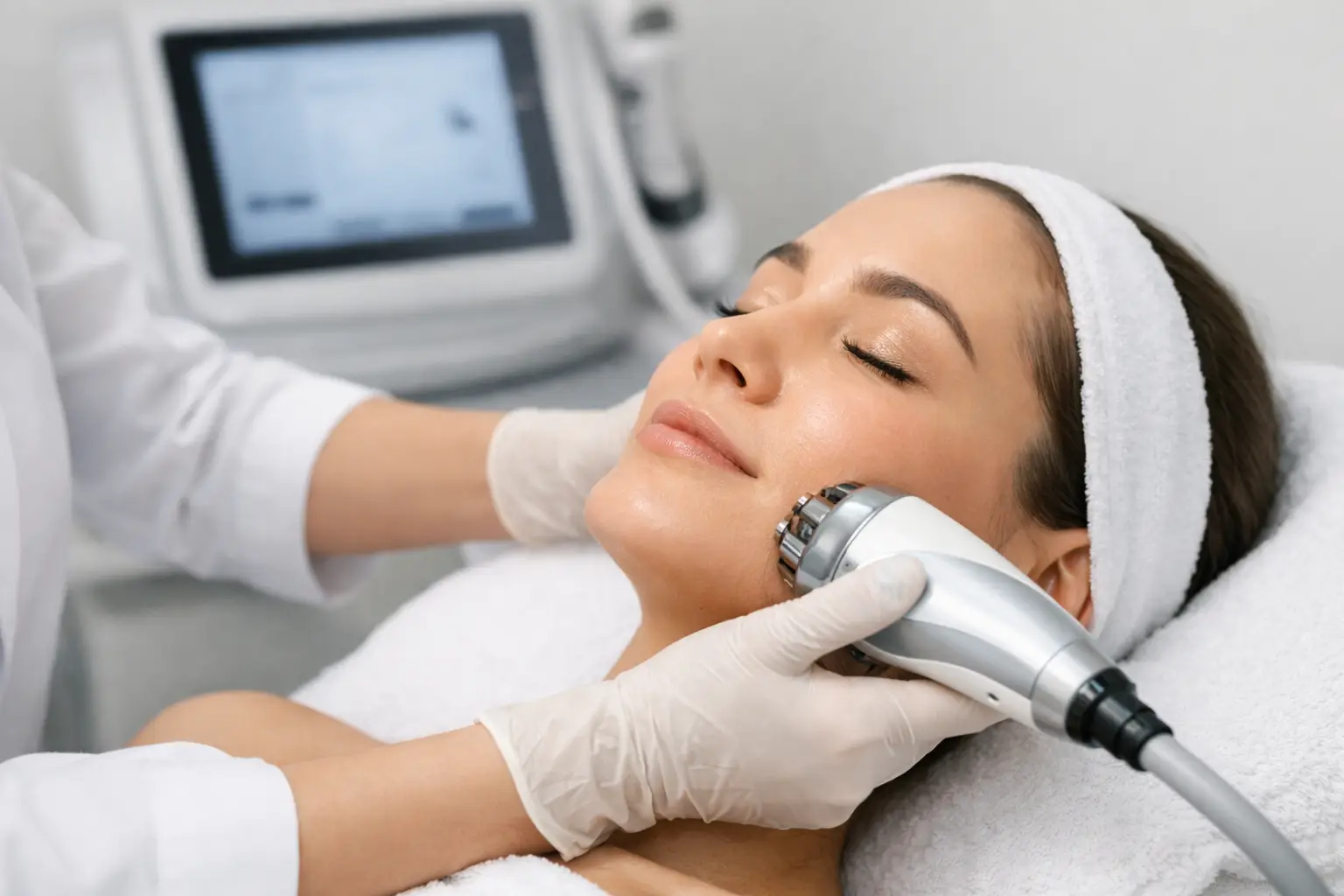
Skin laxity rarely changes overnight. It tends to appear first as a softer jawline, fine creasing around the mouth, looser skin beneath the chin, or a texture that no longer reflects how well you care for your skin. Radiofrequency skin tightening results offer a non-surgical option for improving these concerns by encouraging the skin to rebuild supportive collagen over time.
The key is setting the right expectation: RF treatments are designed for progressive refinement, not a surgical-style transformation in one appointment. The best outcome is skin that looks firmer, smoother, and more supported while still looking like you.
What Radiofrequency Skin Tightening Can Improve
Radiofrequency, often called RF, delivers controlled heat into targeted layers of the skin. That heat stimulates collagen remodeling and can encourage new collagen production. Collagen is a structural protein that contributes to skin firmness, elasticity, and density. As its quality declines with age, weight fluctuation, sun exposure, and genetics, skin can begin to look less defined.
RF skin tightening may improve mild to moderate laxity on the face, neck, and body. Patients commonly seek treatment for early jowling, loose neck skin, fine lines, crepey texture, a less defined jawline, and mild laxity around the eyes or cheeks. Depending on the technology and treatment plan, it may also be paired with microneedling to address concerns such as enlarged pores, acne scarring, and uneven texture.
Results vary because skin concerns are not all the same. A patient with early collagen loss may see meaningful improvement from a series of non-surgical treatments. Someone with significant excess skin or very advanced laxity may need a different approach to achieve their desired level of correction. A consultation should identify what is realistically treatable and which technology is most appropriate.
Radiofrequency Skin Tightening Results: What the Timeline Looks Like
Some patients notice a temporary, subtle tightening effect soon after an RF appointment. This is related to immediate tissue response and may be accompanied by mild redness or warmth. The more meaningful changes take longer because collagen remodeling is a biological process.
In many cases, early improvement becomes more noticeable within four to eight weeks. Results often continue to develop over two to six months as the skin builds and reorganizes collagen. The exact timeline depends on the device, the area treated, treatment intensity, your age, and your existing collagen reserves.
Single-session treatments and treatment-series protocols work differently. For example, a deeper RF treatment may be selected for patients seeking an intensive collagen-stimulation appointment, while RF microneedling often involves a series spaced several weeks apart. Neither is automatically better. The right choice depends on whether the primary concern is skin laxity, texture, scarring, pores, or a combination of issues.
Maintenance also matters. The aging process does not stop after treatment. Many patients choose periodic maintenance sessions after their initial plan to support collagen and preserve their improvement over time.
How Much Tightening Should You Expect?
The most satisfying radiofrequency skin tightening results are usually visible but natural. Patients may see a firmer look to the skin, improved facial contour, softened fine lines, and a smoother surface. On the body, the goal may be a more refined appearance in areas with mild looseness rather than dramatic skin removal.
RF is not intended to replace a surgical facelift, neck lift, or body-contouring surgery when substantial tissue laxity is present. It is best viewed as a clinically informed, non-surgical option for people who want improvement without incisions, extended downtime, or a major change in appearance.
Results can also be influenced by lifestyle. Consistent sun protection, stable weight, adequate hydration, and a personalized skincare plan can help protect the quality of your skin after treatment. Smoking and frequent unprotected sun exposure can work against collagen health and may limit the longevity of results.
Choosing the Right RF Technology for Your Concern
Radiofrequency is a category, not one identical treatment. Devices differ in how deeply they deliver energy, how they manage patient comfort, and whether they combine RF with microneedling or other modalities. The correct technology should be chosen based on your skin quality, treatment area, and tolerance for downtime.
For patients focused on skin firmness and facial contour, treatments such as Thermage CPT or Exion RF may be considered depending on the clinical assessment. Exion AI RF Microneedling may be a stronger fit when laxity appears alongside acne scars, enlarged pores, wrinkles, or rough texture. The microneedles create controlled channels while RF energy is delivered beneath the surface, allowing the treatment to target both texture and collagen support.
A skilled provider will not recommend a device based on popularity alone. They should assess skin thickness, degree of laxity, facial anatomy, prior aesthetic treatments, and whether volume loss is contributing to the concern. In some cases, skin tightening alone is not the most effective answer. Strategic facial contouring or volume restoration may better address a hollow or sagging appearance, while RF supports the skin quality around it.
What Treatment Feels Like and What Downtime to Plan For
Comfort varies by treatment and area. Most RF procedures create a sensation of warmth, pressure, or brief heat pulses. Numbing cream may be used for RF microneedling, and the treatment provider can adjust settings to balance effectiveness and comfort appropriately.
After a non-needle RF procedure, patients may experience temporary redness or a warm feeling that typically resolves quickly. RF microneedling can involve more visible redness, mild swelling, pinpoint marks, or dryness for several days. Your provider will give specific aftercare instructions, which may include avoiding heat exposure, intense exercise, irritating skincare products, and direct sun immediately after treatment.
Downtime should be considered before selecting a procedure. A treatment with little social downtime may be ideal before a busy week, while a deeper resurfacing or microneedling-based plan may be better scheduled when you can allow the skin to recover properly.
Who Is a Good Candidate?
Adults with mild to moderate skin laxity who want a non-surgical treatment are often good candidates for RF skin tightening. It can be appropriate for a wide range of skin tones because radiofrequency targets heat within tissue rather than relying on pigment as its primary target.
A consultation is especially valuable if you have active acne, a skin infection, a history of abnormal scarring, an implanted medical device, or are pregnant. You should also disclose medications, previous fillers or threads, and any recent cosmetic procedures. This information helps the provider determine whether RF is suitable and how to plan treatment safely.
The strongest candidates are not necessarily the youngest or the oldest patients. They are people with clear, realistic goals who understand that collagen renewal takes time. Before-and-after photographs taken in consistent lighting can be helpful for evaluating gradual changes that may be difficult to notice day to day.
A Personalized Plan Produces More Meaningful Results
At Genesis Medi Clinic, RF treatment planning begins with the concern behind the concern. A softer jawline may be driven by skin laxity, volume loss, submental fullness, or several factors at once. Treating the correct cause is what makes the result look balanced rather than overdone.
If you are considering radiofrequency skin tightening, focus less on promises of instant change and more on a plan that matches your skin, timeline, and desired level of improvement. The right treatment should give your skin the support to look refreshed gradually – and give you confidence in every stage of the process.