A face can look tired for more than one reason. Weakening facial muscle support may soften the cheeks and jawline, while collagen loss can create looser skin, fine lines, and a less defined profile. That is why Emface versus Thermage is not a simple question of which treatment is better. The right choice depends on what is driving the changes you see in the mirror.
Both treatments are non-surgical and designed for people who want visible facial rejuvenation without incisions or extended recovery. However, they work through different technologies, target different layers of the face, and suit different treatment goals.
Emface versus Thermage: The Core Difference
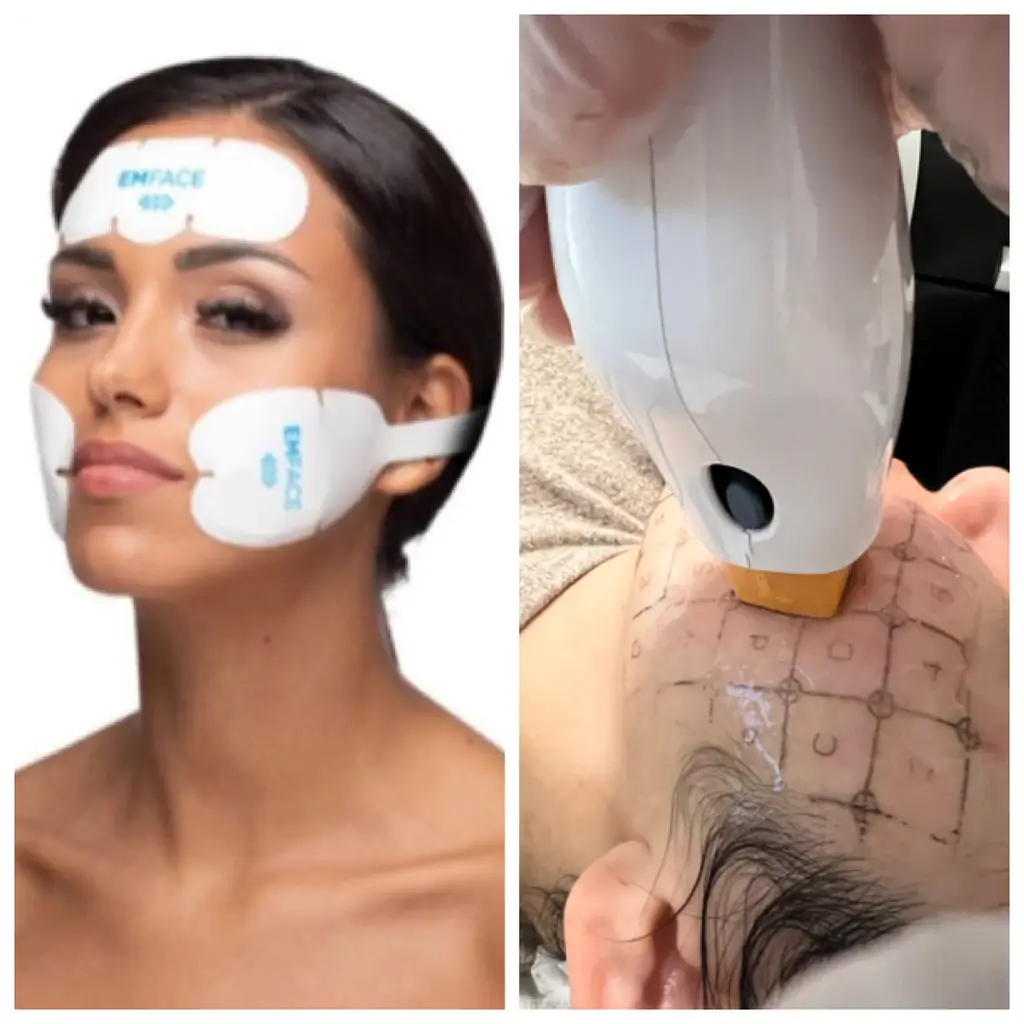
Emface is designed to address the relationship between facial muscle tone and skin quality. It combines synchronized radiofrequency energy with high-intensity facial electrical stimulation, often called HIFES. The radiofrequency component heats the skin to support collagen and elastin production, while the electrical stimulation contracts selected facial muscles to improve their tone and support.
Thermage uses monopolar radiofrequency to deliver controlled heat into the deeper dermal layers. Its primary purpose is skin tightening and collagen remodeling. Thermage is commonly selected for laxity around the lower face, jawline, cheeks, eyes, and neck, as well as fine lines and crepey texture in appropriate treatment areas.
Put simply, Emface takes a muscle-and-skin approach to facial lifting. Thermage is focused more directly on skin tightening through collagen stimulation. Both can improve a softer or less firm appearance, but they do not create results in exactly the same way.
When Emface May Be the Better Choice
Emface is often a strong option for patients who notice that their facial structure looks less lifted, even when skin laxity is still relatively mild. This can include flattening through the midface, early jowl formation, a less crisp jawline, or eyebrows that appear lower than they once did. Because the treatment engages facial muscles, it is particularly relevant when reduced muscle tone contributes to an overall tired or downward-looking expression.
The treatment is non-invasive and does not use needles. During a session, applicators are placed on selected areas of the face. You may feel warmth from the radiofrequency and rhythmic muscle contractions. The sensation is noticeable but generally manageable, and there is no required social downtime afterward.
Emface is usually performed as a series of treatments rather than a one-time appointment. This makes it a practical choice for someone comfortable with a planned treatment schedule and gradual improvement. Results develop as muscle conditioning and collagen remodeling progress over the following weeks.
Emface can be especially appealing if your goal is a natural-looking lift without adding volume. Dermal filler may be appropriate when volume loss is the main concern, but it is not the only path to a more refreshed look. For the right candidate, improving underlying muscle support can create definition without changing facial proportions.
When Thermage May Be the Better Choice
Thermage may be a better fit when loose, lax, or thinning skin is the central concern. Patients often consider it when they see early sagging along the jawline, looseness under the chin, fine lines around the eyes, or skin that no longer feels as firm as it used to.
Thermage CPT delivers radiofrequency energy in a single treatment session for many patients. The handpiece delivers heat deep into the skin while an integrated cooling system helps protect the surface and improve comfort. The treatment can be customized according to the area being addressed, your skin condition, and your tolerance.
Unlike Emface, Thermage does not stimulate facial muscles. Its strength is collagen remodeling. The heat delivered during treatment is intended to encourage the skin’s natural renewal process, leading to gradual tightening and improved texture. Some patients see an early change, but the more meaningful tightening typically develops over several months as new collagen forms.
Thermage is often a sensible choice for adults who want a single-session treatment plan and are primarily concerned with skin laxity rather than muscle tone. It can also be useful for areas where muscle stimulation is not the treatment priority, such as the neck or delicate eye area when clinically appropriate.
Comparing Results, Treatment Time, and Downtime
The most useful comparison is not whether one device produces more dramatic results. It is whether its mechanism matches your concern.
Emface may provide a more lifted, supported look in patients whose muscle tone and early skin laxity both play a role. It is commonly performed in multiple sessions, with appointments generally shorter than a full Thermage treatment. The results are progressive and subtle by design, which can be ideal for patients who want others to notice they look rested without identifying a specific procedure.
Thermage is intended to improve skin firmness, fine lines, and contour through collagen stimulation. A session can take longer depending on the treatment area, but it is frequently completed in one visit. Results also develop gradually, and skin tightening can continue to improve for several months.
Neither treatment should be viewed as a substitute for a surgical facelift when significant skin excess or advanced jowling is present. Non-surgical technologies can improve mild to moderate concerns and help maintain facial quality, but they have realistic limits. A careful assessment prevents disappointment and helps determine whether skin tightening, muscle stimulation, injectables, or a combined plan will produce the most balanced improvement.
Comfort and Recovery Considerations
Both Emface and Thermage are non-surgical treatments with little to no downtime for most patients. You can generally return to work, social plans, and normal daily routines after treatment. Mild redness, warmth, or temporary tenderness may occur, depending on the treatment intensity and your skin’s sensitivity.
The sensation differs between the two. Emface feels like repeated facial contractions combined with heat. Some people compare it to an intense facial workout. Thermage creates brief, deep heat sensations as energy is delivered, followed by cooling at the skin surface. Comfort levels vary, and your provider should explain what to expect before treatment begins.
If you are planning treatment before a wedding, vacation, or major event, allow enough time for gradual results to develop. Neither procedure is meant to be a last-minute fix. A consultation several months before an important date provides more flexibility and allows time to consider complementary options if needed.
Can Emface and Thermage Be Combined?
For some patients, the answer is yes. Emface and Thermage can be complementary because they address different contributors to facial aging. One may support facial muscle tone and lift, while the other focuses on collagen remodeling and skin firmness.
A combined approach is not automatically necessary. If your concern is primarily loose skin under the chin or along the neck, Thermage may be the more direct solution. If you are bothered by a less elevated cheek area and early loss of facial support, Emface may be more relevant. Patients with multiple concerns may benefit from a staged plan that considers skin quality, muscle tone, volume loss, wrinkles, and facial balance together.
This is also where professional assessment matters. Over-treating one concern while ignoring another can produce an uneven result. For example, a patient with noticeable volume loss may require a different strategy than someone with good volume but declining skin firmness.
Who Should Avoid or Delay Treatment?
A consultation is necessary before either procedure. Your provider should review your medical history, current medications, prior cosmetic treatments, skin condition, and any implanted medical devices. Pregnancy, certain metal implants, electrical devices, active skin infections, or specific medical conditions may affect candidacy.
It is also important to disclose any recent injectable treatments, facial surgery, or changes in health. The safest treatment plan is one that is adjusted to your anatomy and medical profile, not selected solely from before-and-after photos or social media trends.
For patients in Richmond Hill, Markham, Vaughan, North York, Toronto, and nearby communities, Genesis Medi Clinic can evaluate whether Emface, Thermage CPT, or another non-surgical option better matches the specific changes you want to correct.
The best result begins with an honest diagnosis: choose Emface when facial muscle support is part of the problem, choose Thermage when skin laxity is the priority, and consider a customized plan when your concerns overlap. A focused consultation can turn a broad goal like “looking more refreshed” into a treatment approach with a clear purpose.