
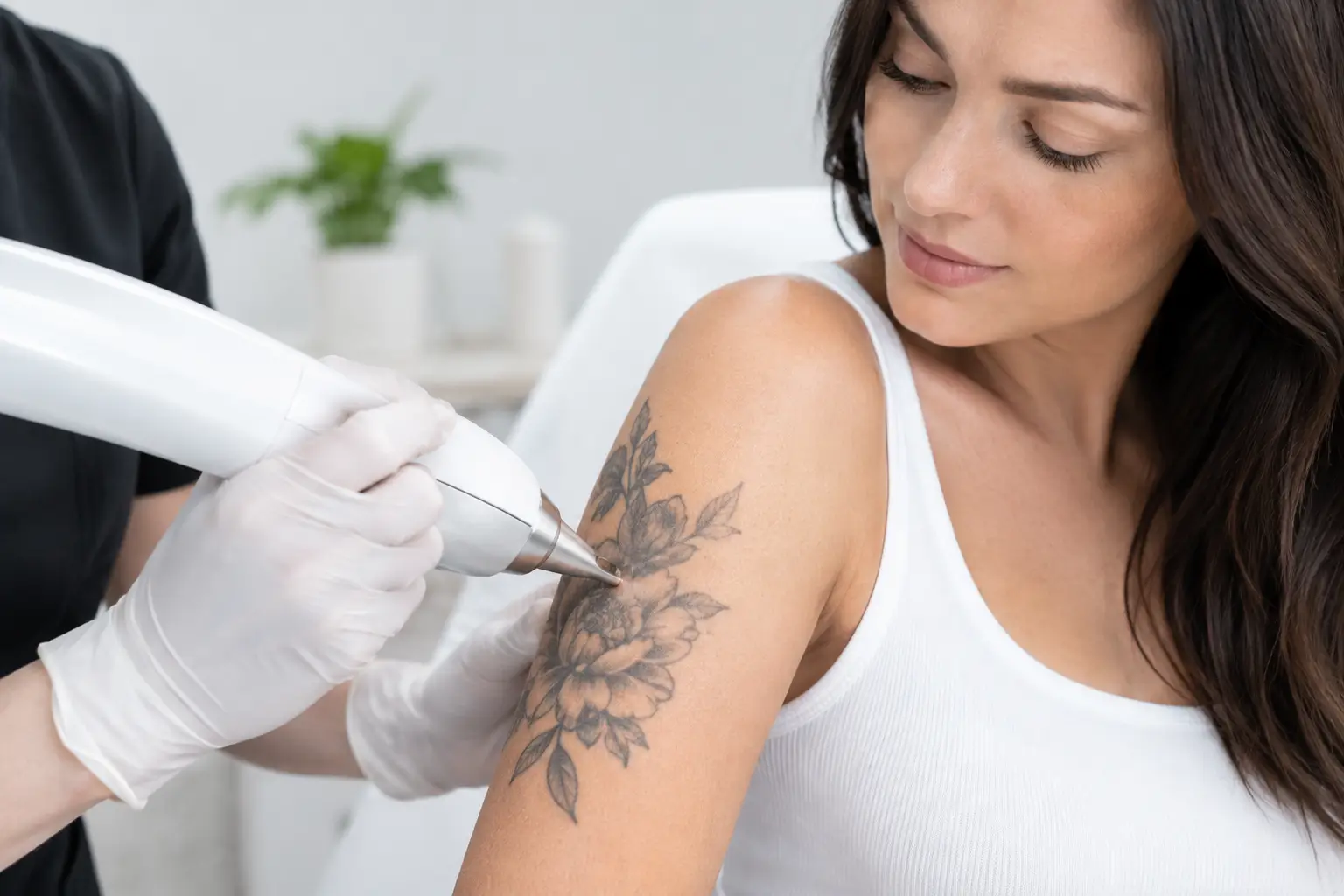
A tattoo can look nearly unchanged when you leave your first appointment, which can be discouraging if you expect immediate clearing. Tattoo removal fading stages are gradual because the treatment breaks ink into particles, but your body needs time to clear those particles afterward. The changes are real, but they rarely happen in a straight line or on the same schedule for every color, area, and person.
Professional tattoo removal is a process, not a single event. Understanding what fading should look like between sessions can help you protect your skin, set realistic expectations, and recognize when a treatment plan may need adjustment.
How Tattoo Removal Fading Stages Work
Laser tattoo removal works by delivering targeted energy into tattoo pigment. The energy fractures larger ink particles into much smaller pieces. Your immune system then gradually carries those particles away through normal lymphatic processes.
That second step is why patience matters. The laser initiates the change, but your body does much of the clearing over the following weeks. More frequent treatment is not automatically better. Treating before the skin has recovered and the body has had time to process disrupted pigment can increase irritation without necessarily improving the final outcome.
The number of sessions needed depends on the tattoo itself and your individual response. Older amateur tattoos may fade more readily than dense, professionally applied work. Black and dark blue pigments often respond well, while colors such as green, blue, purple, yellow, and fluorescent shades can be more variable. Location matters too. Tattoos on areas with stronger circulation, such as the upper body, may clear differently from tattoos on the hands, feet, or lower legs.
Stage 1: Immediate Skin Response
Immediately after treatment, the tattoo may appear frosty or white. This is a temporary response caused by rapid changes within the skin and pigment, not the tattoo disappearing on the spot. Mild redness, warmth, tenderness, and swelling are also common in the treated area.
Over the first hours to days, the frosted appearance resolves. The tattoo may then look darker, more defined, or temporarily unchanged. Some people develop pinpoint bleeding, blistering, or light scabbing, especially with densely pigmented tattoos. These responses should be assessed in the context of your skin and treatment settings, but they are not unusual after laser treatment.
Follow the aftercare instructions provided by your clinician carefully. Keep the area clean, avoid friction and picking, protect it from sun exposure, and do not use heat or intense exercise if your provider has advised against it during early healing. Picking at scabs or blisters can raise the chance of scarring or pigment changes.
Stage 2: Early Healing and Subtle Change
During the first one to two weeks, the skin moves through its visible healing phase. Tenderness settles, and any scabbing or blistering should resolve naturally. This is not the time to judge whether the treatment worked.
Some tattoos look slightly duller or less saturated once the surface has healed. Others seem unchanged. This variation is normal. A tattoo that appears stubborn at two weeks may show more meaningful fading later in the treatment interval as the immune system continues to remove fragmented ink.
Your skin may also temporarily look lighter or darker around the tattoo. This can occur after inflammation, particularly in deeper skin tones or skin that has had recent sun exposure. It does not always mean permanent pigment change, but it is a reason to keep your provider informed and maintain strict sun protection.
Stage 3: Gradual Clearance Between Sessions
The most meaningful tattoo fading often occurs over the next four to eight weeks. Instead of disappearing evenly, the ink may begin to look patchy, cloudy, or broken apart. Fine lines can soften first, while dense outlines and heavily saturated sections remain more visible.
This uneven appearance is expected. Tattoo artists place different colors, ink concentrations, and depths throughout a design. A shaded section may lighten before a bold outline. One area may respond quickly while another lags behind. With multicolored tattoos, certain pigments may fade clearly while other colors require a different strategy or more sessions.
Photographs taken in the same lighting before each appointment are more useful than checking the tattoo every day. Day-to-day changes are easy to miss, and lighting can make a tattoo look lighter or darker than it truly is. Consistent photos provide a more objective view of progress over time.
Stage 4: Progressive Fading Over Multiple Treatments
As sessions continue, the tattoo typically becomes lighter and less distinct. The later stages can require patience because the remaining pigment may be deeper, denser, or less responsive. Treatment plans are often adjusted as the tattoo changes. A provider may modify settings, address specific residual colors, or extend the interval when the skin needs more recovery time.
Complete removal is possible for some tattoos, but it cannot be guaranteed. The goal may be significant fading rather than total clearance, particularly with complex colors, cover-up tattoos, cosmetic tattoos, or ink that has been applied deeply. A realistic consultation should address this before treatment begins.
Residual “ghosting” can occur, where a faint outline or pale trace remains after much of the pigment has cleared. In some cases, what looks like remaining ink may be altered skin texture or pigment variation rather than active tattoo color. An experienced assessment can help distinguish between the two.
What Can Affect Your Fading Timeline?
No two tattoos follow exactly the same schedule. Several factors influence how quickly and evenly fading develops:
- Ink color and density: Dense black ink may take many sessions despite responding well to laser energy. Some bright or light colors are less predictable.
- Tattoo age and placement: Older tattoos may have already faded naturally. Areas farther from the torso can sometimes clear more slowly.
- Professional versus amateur application: Professional tattoos often contain more pigment placed at a consistent depth. Amateur tattoos may be less dense but can still vary widely.
- Your skin and immune response: Overall health, circulation, healing response, and individual biology affect clearance.
- Sun exposure and aftercare: Tanned, irritated, or poorly healed skin can limit safe treatment options and complicate recovery.
- Treatment spacing: Allowing adequate time between sessions supports healing and gives your body time to process ink particles.
Smoking may also affect circulation and wound healing. If you smoke, discuss it honestly during your consultation so your provider can give appropriate guidance for your treatment plan.
When Should You Be Concerned?
Mild redness, swelling, tenderness, and temporary blistering can be part of the expected recovery process. However, contact your provider promptly if you experience increasing pain after the first few days, spreading redness, pus, fever, unusual drainage, or a reaction that seems to be worsening rather than improving.
You should also let your clinician know about a history of keloid scarring, active skin conditions in the treatment area, immune-related conditions, recent medication changes, pregnancy, or prior reactions to laser procedures. These details help determine whether treatment is appropriate and how it should be customized.
A consultation is especially valuable for cover-up tattoos, cosmetic pigment, and tattoos containing multiple colors. These cases need a careful assessment because the pigment behavior and treatment response may be less predictable.
Planning for Results, Not Just Sessions
The best treatment schedule is based on your tattoo, your skin response, and the result you want to achieve. Rushing appointments to meet a deadline can work against skin recovery. On the other hand, waiting too long without a clinical reason may simply extend the overall process. The right interval is individualized.
At Genesis Medi Clinic, tattoo removal planning begins with evaluating pigment color, density, location, skin type, and your desired level of clearance. Advanced laser technology can support targeted treatment, but thoughtful assessment and proper spacing remain central to safe, visible progress.
If your tattoo seems unchanged after one treatment, give the fading process time before assuming the result is final. Track your progress with consistent photos, protect the treated skin, and bring your questions to each follow-up. A well-planned course of treatment gives both your skin and your results the attention they deserve.