
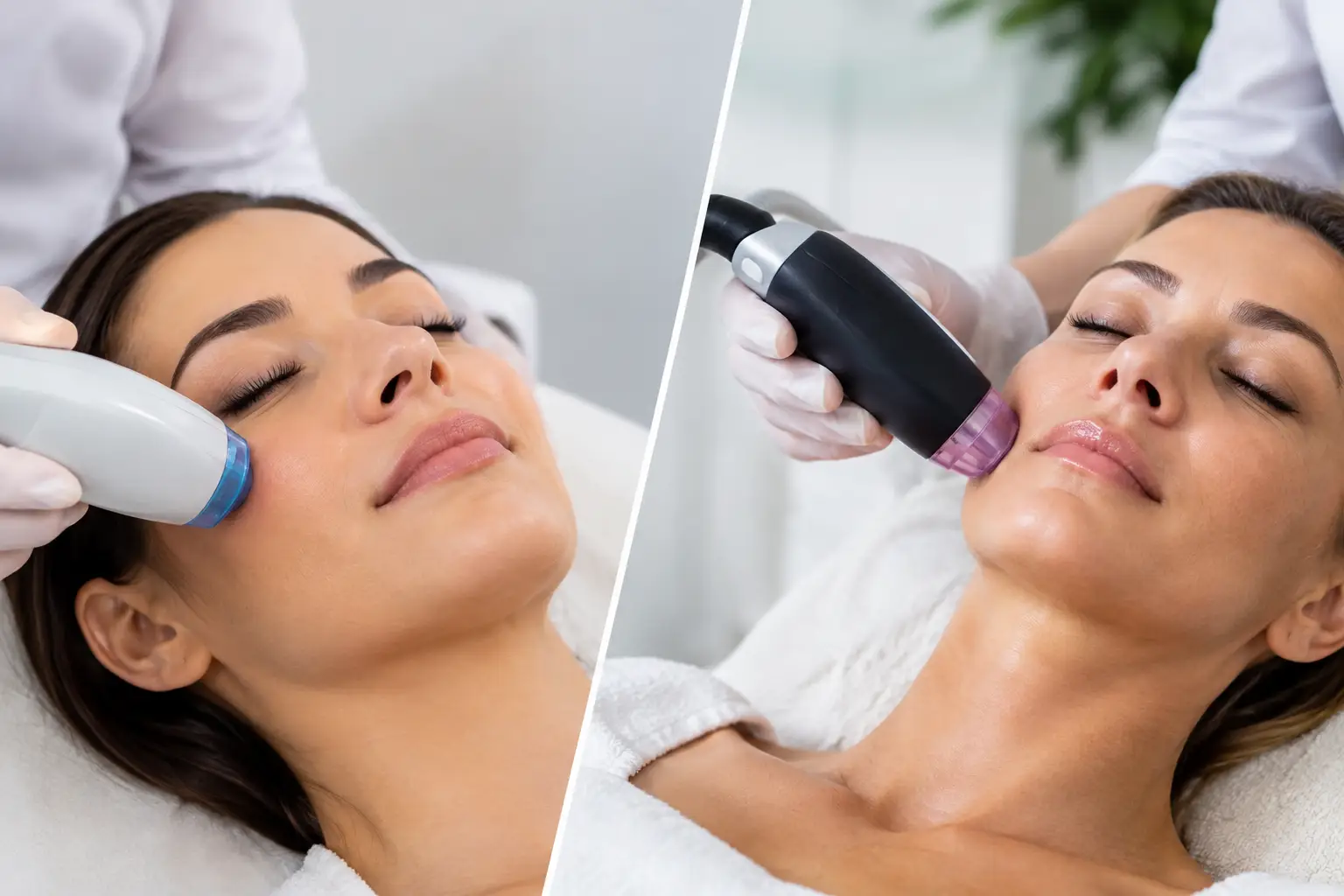
A tightening treatment should match the way your skin is aging, not simply the device with the biggest name. In a Sofwave vs Thermage tightening comparison, both treatments can improve mild to moderate facial laxity without surgery, but they use different energy types, work at different tissue levels, and may suit different priorities.
If your concern is early looseness around the cheeks, jawline, brows, or neck, either option may be worth considering. The better choice depends on your skin quality, degree of laxity, previous aesthetic treatments, comfort preferences, and the amount of change you realistically want from a non-surgical procedure.
Sofwave vs Thermage Tightening: The Core Difference
Sofwave uses advanced ultrasound technology to create controlled heat in the mid-dermis, the skin layer associated with collagen production. Its Synchronous Ultrasound Parallel Beam Technology targets tissue at a consistent depth, approximately 1.5 mm beneath the skin surface. The goal is to stimulate new collagen and elastin while leaving the outer skin intact.
Thermage CPT uses monopolar radiofrequency energy. Rather than concentrating energy at one precise ultrasound depth, radiofrequency heating is designed to warm a broader area of the skin and underlying supportive tissues. This can encourage collagen remodeling and gradual skin contraction, particularly in areas where skin has begun to feel less firm or defined.
Both treatments rely on the body’s collagen response. Neither removes loose skin, and neither replaces the lifting power of a surgical facelift or neck lift. Their strength is gradual improvement: smoother texture, firmer-feeling skin, and more refined contours over time.
Which Areas Can Each Treatment Address?
Sofwave is often selected for facial concerns such as softening of the brow area, fine lines around the eyes, mild cheek laxity, early jowling, and loss of jawline definition. It can also be considered for the neck, depending on the patient’s tissue quality and treatment plan. Because the technology targets a specific dermal level, it is particularly appealing to clients who want collagen-focused renewal without surface damage or prolonged recovery.
Thermage is known for treating larger facial and body areas. On the face, it may be used for laxity around the cheeks, lower face, jawline, and neck. It is also commonly considered for areas such as the abdomen, arms, thighs, and knees, where crepey texture or mild looseness can be a concern. Thermage eye treatments may be appropriate for some patients with mild eyelid laxity or fine lines, provided they are assessed properly.
Area alone does not determine the answer. For example, a patient with early jawline laxity may be a candidate for either treatment. A patient looking to improve mild looseness across a larger body area may lean toward Thermage, while someone focused on a collagen-based facial tightening plan may prefer Sofwave.
Treatment Feel, Time, and Downtime
Both procedures are non-invasive, but comfort can vary from person to person. Sofwave delivers brief pulses of ultrasound energy. Patients may feel warmth, pressure, or quick moments of discomfort as energy is delivered. Topical numbing and other comfort measures may be recommended based on the treatment area and individual sensitivity.
During Thermage, the radiofrequency energy creates a deeper heating sensation. The device incorporates cooling at the skin surface to improve comfort and protect the epidermis. Some patients describe a short, intense heat sensation with each pulse. Comfort settings can be adjusted, but treatment should always remain effective as well as tolerable.
Downtime is generally minimal with both options. Mild redness, temporary swelling, tenderness, or sensitivity can occur and usually resolves quickly. Many patients return to normal daily activities shortly after their appointment. However, it is wise to schedule treatment away from major events if you prefer to allow time for any temporary swelling or redness to settle.
A Sofwave session is often shorter when treating a focused facial area. Thermage appointment time can vary more widely based on the size of the area and number of pulses required. A consultation should include a clear discussion of treatment duration, comfort planning, and post-treatment expectations.
When Will You See Results?
Immediate tightening can occur after Thermage due to collagen contraction from heat, but this is not the full result. The more meaningful change develops gradually as the body produces and remodels collagen. Many patients notice continued improvement over two to six months.
Sofwave results also develop over time. Some patients begin to notice a subtle improvement within several weeks, with collagen-building results becoming more visible around three months. Skin continues to respond differently from one person to another, especially when age, sun exposure, genetics, and baseline laxity are considered.
This timeline matters when planning for a wedding, milestone event, or professional photos. Non-surgical tightening is not usually a last-minute treatment. For the best chance of seeing your response before an important date, plan ahead with your provider.
How Long Do Sofwave and Thermage Results Last?
Collagen stimulation is not permanent because skin aging continues. Many patients enjoy visible improvement for roughly one year or longer, although the duration varies. Your skincare habits, UV exposure, weight changes, smoking status, and natural collagen production all influence how long results remain noticeable.
Some patients choose a single treatment and maintain their results with medical-grade skincare, injectables, microneedling, or other collagen-supporting procedures. Others repeat tightening treatments on a schedule determined by their provider. Maintenance should be based on visible skin changes and goals, not a one-size-fits-all calendar.
Who May Be a Better Candidate for Sofwave?
Sofwave may be a strong fit for adults with early to moderate laxity who want a focused facial treatment with no incisions and limited disruption to their routine. It may also suit patients whose main concerns are fine lines, mild brow drooping, cheek laxity, or a jawline that has started to lose crispness.
The treatment is best viewed as refinement rather than replacement volume. If the face appears hollow due to volume loss, tightening alone may not create the balanced result you want. In that situation, a provider may discuss whether fillers, biostimulators, or another approach would better address the underlying cause of facial aging.
Who May Be a Better Candidate for Thermage?
Thermage may be more suitable when you want to treat a broader area, have concerns that extend beyond the face, or prefer a radiofrequency-based collagen remodeling approach. It can be a practical option for patients with mild skin laxity on the body as well as the lower face and neck.
It may also fit patients who have had previous non-surgical treatments and are looking for another method to support firmness. Still, patients with significant sagging, deep jowls, or a large amount of excess skin should be realistic. Energy-based tightening can improve quality and mild laxity, but it cannot reliably produce a surgical-level lift.
The Most Important Factor: Your Assessment
The best device is not always the newest treatment or the treatment a friend chose. A proper assessment should look at skin thickness, laxity, collagen quality, facial volume, bone structure, and whether your concern is really caused by looseness rather than volume loss, muscle movement, or skin texture.
Your provider should also review your medical history, current medications, implants, prior procedures, and any conditions that could affect treatment safety. Photos taken in consistent lighting can help establish a baseline and make gradual improvement easier to evaluate.
At Genesis Medi Clinic, a consultation can help determine whether Sofwave, Thermage CPT, or a customized combination plan is the most appropriate route for your concerns. The goal is not simply to tighten skin. It is to choose a treatment plan that supports natural-looking definition and fits the changes you want to see over time.