A sharper jawline can change the balance of the entire lower face, but the right approach depends on what is actually softening that definition. This guide to nonsurgical jawline contouring explains how injectables, skin-tightening technology, and double-chin treatments address different concerns without surgery.
For some patients, the issue is a chin that sits slightly behind the lips and nose. For others, it is jowling, loose skin, fullness under the chin, or a wide lower face caused by enlarged masseter muscles. These concerns can look similar in photos, yet they require very different treatment plans. The best results come from treating the cause, not simply adding volume along the jaw.
What Nonsurgical Jawline Contouring Can Improve
Nonsurgical contouring is designed to improve facial proportions and definition with injectable treatments or energy-based technologies. It can create a cleaner transition from the chin to the neck, support a softened jawline, improve chin projection, or reduce the appearance of lower-face heaviness.
It does not alter the jawbone or replace surgical correction when significant skin laxity, a large amount of excess fat, or structural asymmetry is present. It can, however, make a meaningful difference for patients who want a refined, natural-looking change with little to no downtime.
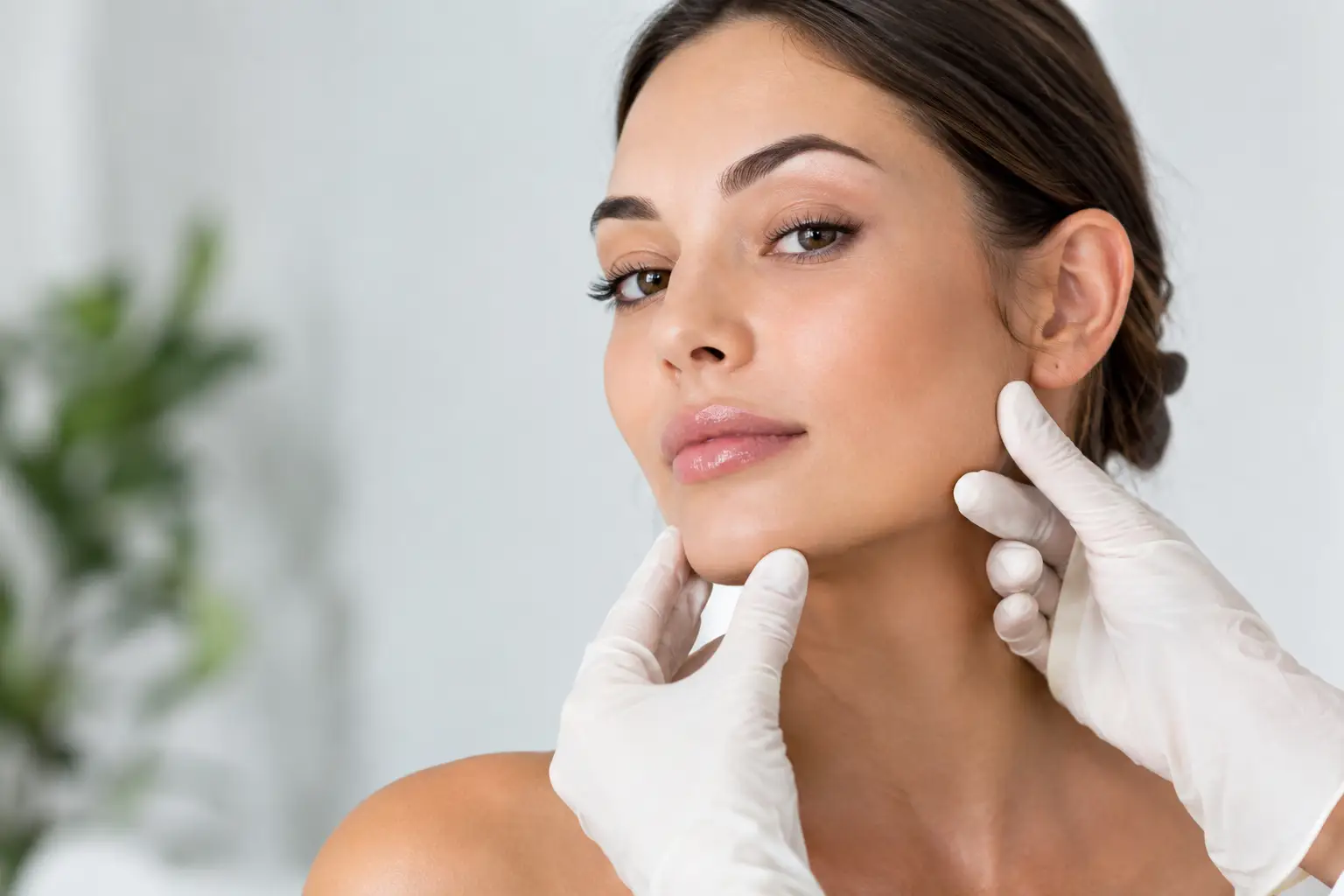
A consultation should begin with an assessment of the face at rest and in motion. Your provider should evaluate chin projection, jaw width, skin quality, lower-face volume, neck fullness, dental bite, and muscle activity. A treatment that looks excellent from the front may be incomplete if the side profile or neck contour has not been considered.
A Guide to Nonsurgical Jawline Contouring Options
Dermal filler for chin and jaw definition
Dermal filler is often the most direct option when the jawline lacks structure. Strategically placed filler can strengthen a recessed chin, define the mandibular angle, smooth a pre-jowl hollow, and create a more continuous jaw contour.
The goal is not to make every face look angular. A skilled treatment plan considers facial shape, gender presentation, age, and the amount of support the skin can comfortably carry. In a patient with mild jowling, for example, restoring structural support at the chin and along selected areas of the jaw may reduce the shadowing that makes jowls more noticeable.
Results are visible immediately, although minor swelling or tenderness can occur for several days. Depending on the product used, placement, and individual metabolism, filler results commonly last many months and may be maintained over time. Too much filler, or filler placed without a full-face plan, can make the lower face look heavy rather than defined.
Injectable filler carries real medical risks, including bruising, infection, nodules, and rare vascular complications. Jawline contouring should be performed by a qualified medical injector who understands facial anatomy and has an appropriate plan for managing complications.
Neuromodulators for a wide lower face
A wide or square jaw is not always a bone-structure concern. In some people, repeated clenching or grinding enlarges the masseter muscles at the back of the jaw. Neuromodulator injections, including BOTOX® Cosmetic when appropriate, can relax these muscles and gradually reduce their bulk.
This treatment is best for muscle-related width, not loose skin or fullness beneath the chin. Results develop gradually, usually becoming more noticeable over several weeks. Maintenance is required because muscle activity returns over time.
Masseter treatment should be approached carefully. The masseters contribute to chewing, and dosage must be individualized to avoid an overly weakened bite or an unnatural lower-face shape. Patients with existing jaw pain, dental concerns, or significant facial laxity may need additional evaluation before treatment.
Radiofrequency and ultrasound for mild laxity
When the jawline appears blurred because the skin has lost firmness, energy-based skin tightening may be a better starting point than filler alone. Radiofrequency and focused ultrasound treatments deliver controlled energy beneath the skin to support collagen remodeling and improve tissue firmness over time.
This approach is especially useful for early jowling, mild skin looseness under the chin, and patients who prefer a gradual result. Treatments such as Thermage CPT, Sofwave™, or Exion RF and Targeted Ultrasound may be selected based on the depth of concern, skin quality, and desired downtime.
Skin tightening is not an instant replacement for a surgical lift. Results develop over weeks to months as collagen remodeling occurs, and the degree of improvement depends on baseline laxity. Patients with very loose skin may see a subtle benefit, while those with mild to moderate laxity may achieve a noticeably cleaner lower-face contour.
Treatments for fullness under the chin
A double chin can obscure an otherwise well-defined jawline. Submental fullness may be caused by localized fat, loose skin, muscle bands, genetics, or a combination of factors. The correct treatment depends on which of these is most prominent.
For patients with small, stubborn pockets of fat and good skin elasticity, injectable fat-reduction treatment may be considered. It works gradually and may require a series of sessions. Swelling in the treatment area can be significant for several days, so timing matters if you have an upcoming event.
If the skin is also loose, combining fat reduction with skin tightening can produce a more balanced result. Adding filler to the chin may further improve the profile, but it should not be used to camouflage substantial under-chin fullness without addressing the fullness itself.
Why Combination Treatment Often Looks More Natural
Many of the strongest nonsurgical outcomes are built in stages. A patient may benefit from chin filler for projection, a small amount of jawline support to improve continuity, and radiofrequency treatment to address early laxity. Someone with a wide lower face may combine masseter relaxation with chin refinement rather than adding volume to the jaw angles.
Combination care is not about doing more treatment. It is about selecting treatments that solve different parts of the same visual concern. A thoughtful plan also allows time to see how each change settles before adding more.
This matters particularly as the face ages. Volume loss in the cheeks, skin descent, and changes in the neck can all affect how the jawline appears. Treating only the jaw may not always deliver the proportion you want. In some cases, restoring support higher in the face creates a more flattering lower-face result than placing additional product at the jawline.
What to Expect at Your Consultation
A high-quality consultation should be specific. Rather than asking only whether you want a sharper jawline, your provider should identify whether your concern is projection, width, jowling, laxity, fat, or asymmetry. Clear photography and an honest discussion of your medical history, prior injectable treatments, medications, allergies, and aesthetic goals are part of safe planning.
You should also discuss timing. Injectable treatments can cause temporary swelling and bruising, while collagen-stimulating treatments need time to develop. If you are preparing for a wedding, photos, or another major event, it is wise to plan well in advance rather than booking at the last minute.
Ask what result is realistic for your anatomy, how long it may last, whether maintenance is expected, and what alternatives may better suit your concern. A credible recommendation may include deciding not to treat an area yet, or referring you toward a surgical opinion when nonsurgical options are unlikely to meet your goals.
Choosing the Right Starting Point
If your jawline has always lacked projection, structural filler may be the most relevant option. If it has become softer over time, skin tightening and carefully placed support may be more appropriate. If fullness under the chin is the main issue, address that first. If clenching has broadened the face, masseter treatment may create the change you have been seeking.
The most effective jawline contour is one that still looks like you. At Genesis Medi Clinic, a personalized assessment can help determine whether your concern is best addressed with injectable contouring, advanced skin tightening, or a staged combination plan that respects your facial structure and your timeline.