A jawline that looks less defined, skin that no longer feels firm around the cheeks, and early laxity under the chin are common reasons people search for an Exion ultrasound review. The real question is not whether ultrasound technology can tighten skin. It can. The more useful question is whether Exion is the right level of treatment for your skin quality, degree of laxity, and timeline for visible improvement.
Exion RF/Targeted Ultrasound is a non-surgical skin tightening treatment designed to stimulate collagen where the skin needs more structural support. It is often considered by patients who want firmer facial contours and smoother-looking skin but are not ready for surgery or do not need significant volume replacement.
What Is Exion Targeted Ultrasound?
Exion is a treatment platform with several technologies, including radiofrequency and targeted ultrasound. In an ultrasound skin tightening treatment, controlled energy is delivered beneath the skin surface to create precise thermal stimulation in deeper tissue layers. That controlled heating signals the body to begin a collagen remodeling response.
Collagen is one of the proteins that gives skin its density and resilience. As collagen production and organization decline with age, the face can begin to look softer around the jawline, lower cheeks, and neck. Exion is intended to improve the quality and firmness of the existing skin rather than add volume or change facial features.
The RF component may also be used as part of a customized treatment plan. Radiofrequency heats tissue differently from ultrasound, so combining technologies can be appropriate when a patient has both superficial crepiness and deeper laxity. The correct settings, treatment area, and number of sessions should be selected after an in-person assessment rather than copied from someone else’s treatment plan.
Exion Ultrasound Review: What Results Can You Expect?
The best Exion ultrasound reviews are usually realistic. This is not a surgical lift, and it should not be evaluated by surgical standards. It is a gradual collagen-stimulating treatment that can help the skin look firmer, tighter, and more supported over time.
Patients may notice early changes in skin texture or a subtle tightening effect within several weeks. More meaningful improvement often develops over the following two to three months as collagen remodeling progresses. For some people, the final result continues to refine for several months after treatment.
Results vary based on age, baseline collagen levels, skin thickness, sun exposure, smoking status, weight fluctuations, and the amount of existing laxity. A patient in their late 30s with mild lower-face looseness may see a noticeable improvement in contour. Someone with substantial jowling, heavy neck skin, or significant tissue descent may see a modest improvement but may need another approach to achieve their desired change.
A strong outcome is usually described as looking rested and more defined, not dramatically different. That subtlety is a benefit for many people who want a natural-looking correction without downtime or obvious signs of having had a procedure.
Areas commonly treated
Exion targeted ultrasound may be considered for the lower face, jawline, under-chin area, cheeks, and neck. It may also support skin tightening in selected body areas, depending on the treatment plan and the individual’s concerns.
The right treatment area matters. Treating a double chin caused mainly by excess fat is different from treating a soft jawline caused by skin laxity. Similarly, hollow cheeks may require a volume-restoring treatment rather than more tightening. A careful assessment prevents patients from spending time and money on a treatment that does not address the true cause of the concern.
What Does an Exion Treatment Feel Like?
Most patients describe Exion ultrasound as a series of brief warm sensations with intermittent deeper pulses. Sensitivity can vary by area. The jawline and bony parts of the face may feel more intense than fuller areas of the cheeks or neck.
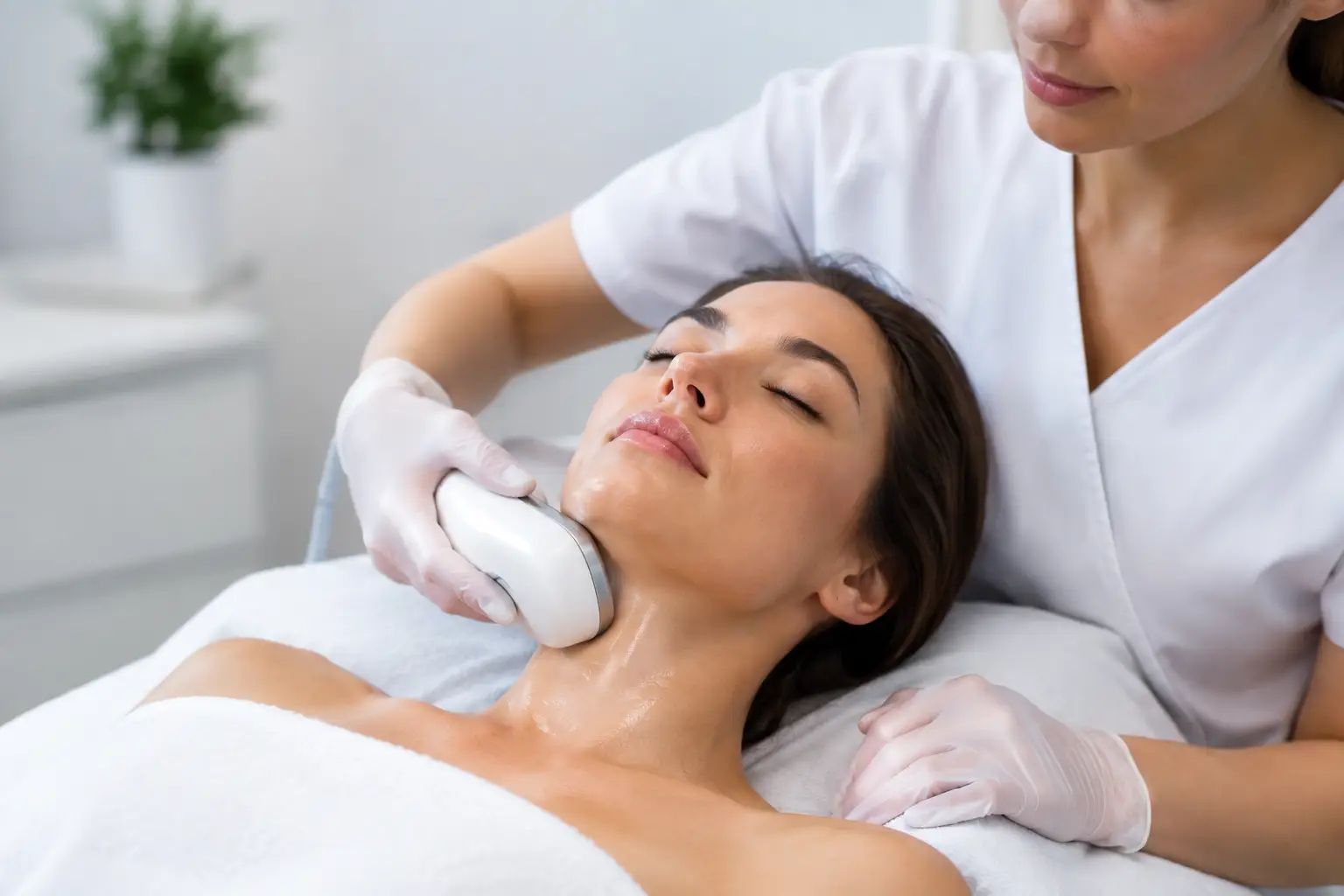
A provider applies ultrasound gel and moves the handpiece across the treatment area in a planned pattern. Treatment time depends on the areas being addressed, but many appointments can be completed within an hour. There is generally little to no downtime, although temporary redness, mild swelling, or tenderness can occur.
The goal is controlled heating, not unnecessary discomfort. Be direct during the appointment if an area feels too intense. A qualified provider can adjust the treatment approach while still working toward effective energy delivery.
Is Exion Better Than Other Skin Tightening Options?
Exion is not automatically better than every other non-surgical tightening procedure. It is a strong option when the concern is mild to moderate laxity and the patient wants gradual collagen support without surgery. Its value comes from matching the technology to the correct concern.
For example, radiofrequency microneedling may be a better fit for acne scarring, enlarged pores, rough texture, and fine lines because it addresses the skin through controlled microchannels and RF energy. Injectable treatments may be more appropriate when volume loss is causing folds or shadowing. Neuromodulator injections can soften expression lines but do not tighten loose skin.
Other ultrasound and radiofrequency technologies may also be considered depending on the treatment area, comfort preferences, and degree of laxity. During a consultation, the discussion should focus less on which device has the strongest name recognition and more on what is creating the visible concern in your face or body.
Who Is a Good Candidate for Exion Ultrasound?
A good candidate often has early to moderate skin laxity and wants a non-surgical treatment with gradual results. Many patients are in their 30s through 60s, although candidacy is based on skin condition rather than age alone.
Exion can be especially appealing for people who have started to see a softer jawline, mild looseness under the chin, or a loss of firmness in the lower face but still have reasonably good skin quality. It can also be used as part of ongoing aesthetic maintenance to support collagen as the skin changes over time.
Patients with active skin infections, certain implanted electronic devices, pregnancy, or medical conditions that affect healing may not be candidates. Your provider should review your health history, current medications, prior cosmetic treatments, and expectations before proceeding.
Questions to Ask Before Booking
A consultation should give you more than a generic promise of tighter skin. Ask which layer of tissue is being targeted, whether ultrasound alone is recommended or whether RF should be included, and how many sessions are expected for your concern.
Also ask what improvement is realistic in your specific treatment area. Request a clear explanation of when to expect changes, what aftercare is needed, and whether your goal might be better addressed with another procedure. Honest guidance is especially valuable if you are deciding between tightening, contouring, fillers, or a combination plan.
At Genesis Medi Clinic, treatment planning begins with the visible concern and the skin’s condition, not a one-device-fits-all approach. That matters because the best treatment is the one that addresses the reason your jawline, cheeks, or neck look less defined.
Exion can be a worthwhile choice when you want a measured, non-surgical improvement in skin firmness and are comfortable allowing collagen time to work. The next useful step is a professional assessment that turns a broad concern like sagging skin into a precise treatment plan.