A Toronto Emface treatment review should answer more than whether the procedure is comfortable. The real question is whether a needle-free treatment can create enough lifting, definition, and skin improvement to justify the appointment series. For the right candidate, Emface can be a practical option for early facial laxity, softening cheek support, forehead lines, and a tired-looking facial shape – particularly when surgery and injectable treatments are not the preferred starting point.
Emface is not designed to dramatically replace lost facial volume or correct significant skin laxity in one visit. Its value is in its combination approach: treating the facial muscles that support expression and contour while also delivering radiofrequency energy to the skin. Expectations matter. Patients who understand what the technology is intended to improve are usually more satisfied with the treatment process.
What Emface Is Designed to Treat
Emface combines synchronized radiofrequency with HIFES muscle stimulation. The radiofrequency component heats the skin and is intended to support collagen and elastin production. At the same time, HIFES technology stimulates targeted facial muscles at a level that is difficult to achieve through voluntary movement alone.
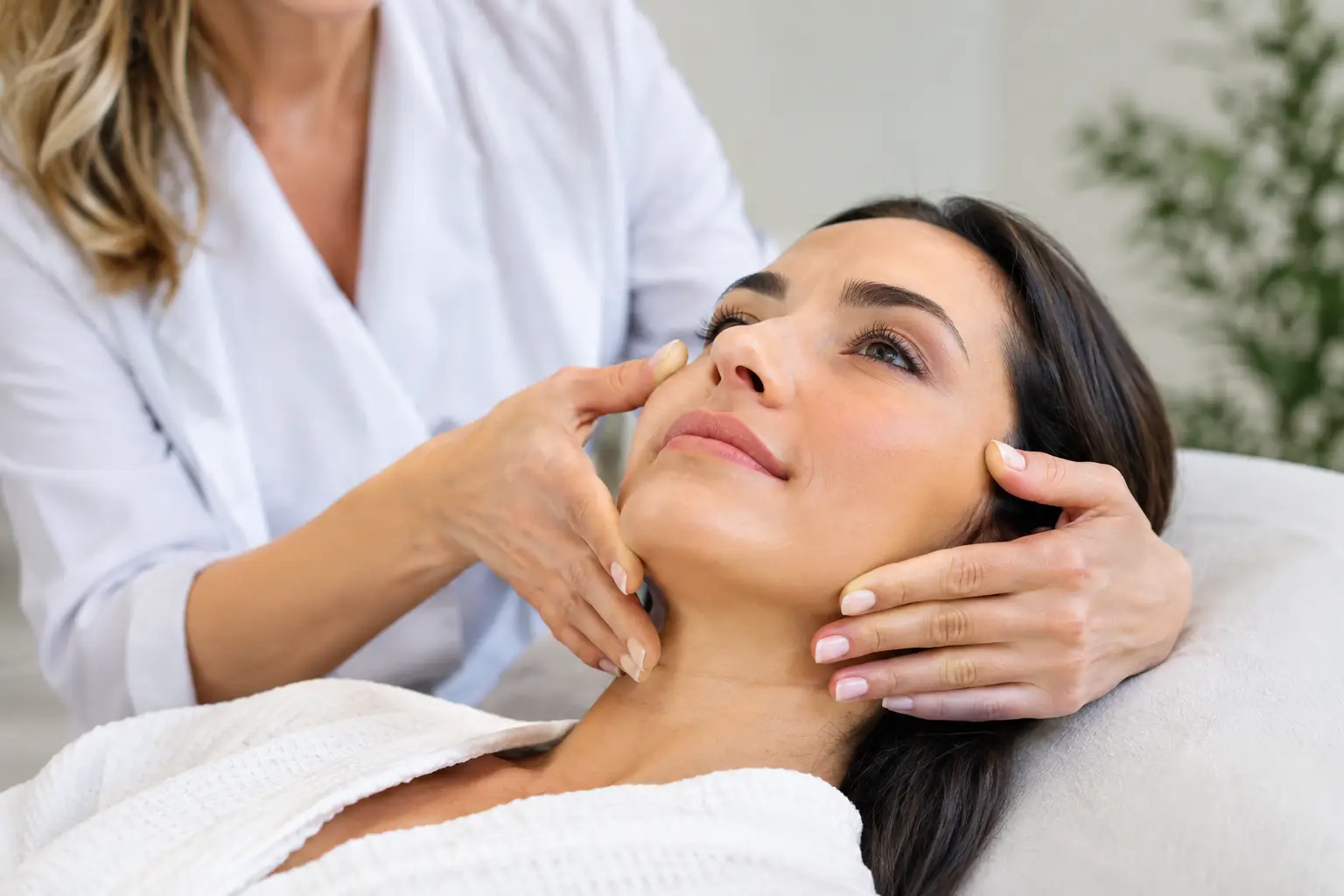
In a typical facial treatment, applicators are placed across areas such as the forehead and cheeks. The goal is not to freeze muscle movement. Instead, Emface works with the deeper muscular structure that contributes to facial support and contour. This is why it is often considered by patients who feel their face looks less lifted than it once did, even if their skin does not yet appear severely loose.
The treatment may be appropriate for concerns including mild to moderate skin laxity, diminished cheek definition, early jowling, a less open-looking eye area, and fine lines associated with declining skin quality. It can also appeal to patients who want a noninvasive option without needles, numbing cream, or recovery time.
Toronto Emface Treatment Review: What the Appointment Feels Like
A treatment session is generally straightforward. After the skin is assessed and cleansed, the provider positions the applicators according to the treatment plan. The session usually takes about 20 minutes, depending on the areas being addressed.
The feeling is unusual but manageable for most patients. Radiofrequency creates a gradual warmth, while muscle stimulation produces repeated contractions in the forehead or cheeks. The contractions can feel intense at first, especially around the brow. They should not be sharp or painful. A trained provider can adjust settings based on comfort and treatment tolerance.
There is typically no downtime. Some temporary redness or warmth may occur, but patients commonly return to work, social plans, or errands immediately afterward. This convenience is a major advantage for busy professionals throughout Toronto, Richmond Hill, Markham, North York, and Vaughan who want an advanced facial treatment without planning recovery around their schedule.
When Results Usually Start to Show
Emface is commonly performed as a series rather than a single session. A provider may recommend four treatments, often spaced several days apart, then evaluate the outcome over the following weeks. Collagen remodeling is gradual, and muscle conditioning also takes time.
Some patients notice that their face looks more refreshed after the early sessions. More meaningful changes tend to develop later, as the skin responds to radiofrequency and the treated muscles gain improved tone. The outcome is often described as a subtle lift rather than an obvious “done” appearance.
That subtlety is a strength for many patients, but it is also the primary trade-off. If your goal is immediate restoration of hollow cheeks, deep folds, or substantial skin tightening, Emface alone may not meet the mark. Dermal filler, neuromodulator injections, microneedling, ultrasound skin tightening, or other corrective options may be more appropriate depending on the concern.
Who Is Most Likely to Be Happy With Emface?
The strongest Emface candidates are often adults who have begun seeing mild facial descent or a softer facial outline but are not ready for surgery. They may notice that makeup settles differently, photographs look less defined, or their cheeks seem flatter despite maintaining a stable weight.
It can also be a good fit for people who prefer to avoid needles or who want to complement an existing aesthetic plan. For example, a patient may use Emface to support overall facial tone while using targeted injectables for lines or volume loss that require more direct correction.
Age is not the deciding factor. Skin quality, muscle tone, facial anatomy, volume loss, and the degree of laxity are more useful indicators. A person in their late 30s with early cheek descent may be an excellent candidate, while someone in their 50s may still benefit if their goals are realistic and their tissue quality supports a noninvasive approach.
Where Emface Has Limits
A credible review should be clear about what Emface cannot do. It does not create the same degree of lifting as a surgical facelift. It does not replace lost volume in the way filler can, and it does not erase deep static wrinkles immediately. It also cannot correct every cause of facial aging.
For some patients, a combination plan delivers a better result than any single technology. Volume loss may need to be addressed first. Textural concerns, acne scarring, or pigment irregularities may require a different treatment category. Skin laxity around the lower face may respond better to a treatment plan that includes radiofrequency, ultrasound, or other tightening technologies.
This is why consultation is not a formality. A provider should assess whether the concern is mainly related to skin, fat, muscle, volume, or bone structure. Treating the wrong layer can lead to disappointment, even when the device itself is appropriate and properly used.
Safety and Treatment Planning
Emface is noninvasive, but it is still a medical aesthetic treatment that requires proper screening. Patients should disclose pregnancy, implanted electronic devices, metal in or near the treatment area, active skin infections, recent procedures, and relevant medical conditions. Eligibility is individualized, and the provider should review contraindications before beginning treatment.
At Genesis Medi Clinic, treatment planning should focus on the visible concern rather than a one-size-fits-all device recommendation. A patient seeking a more defined cheek area may need a different plan than someone concerned about forehead lines, skin texture, or lower-face heaviness. Clear before-and-after goals are more useful than asking for a treatment simply because it is popular.
It is also reasonable to ask how many sessions are recommended, when photographs will be taken, whether maintenance may be needed, and what complementary options would be considered if the desired result involves volume or more advanced tightening. These questions help turn a general interest in Emface into a plan with measurable expectations.
Is Emface Worth It?
Emface can be worth it when the goal is a gradual, natural-looking improvement in facial support and skin firmness without needles or downtime. Its appeal is strongest for patients who want to look rested, slightly lifted, and more defined rather than visibly altered.
The treatment is less compelling for someone seeking a dramatic one-visit transformation or a solution for pronounced sagging and major volume loss. In those cases, a customized combination approach may provide better value and a more satisfying outcome.
The best next step is not to compare treatments by trend alone. Start with the concern you see in the mirror, identify the layer causing it, and choose the procedure that is built to treat that specific problem.