
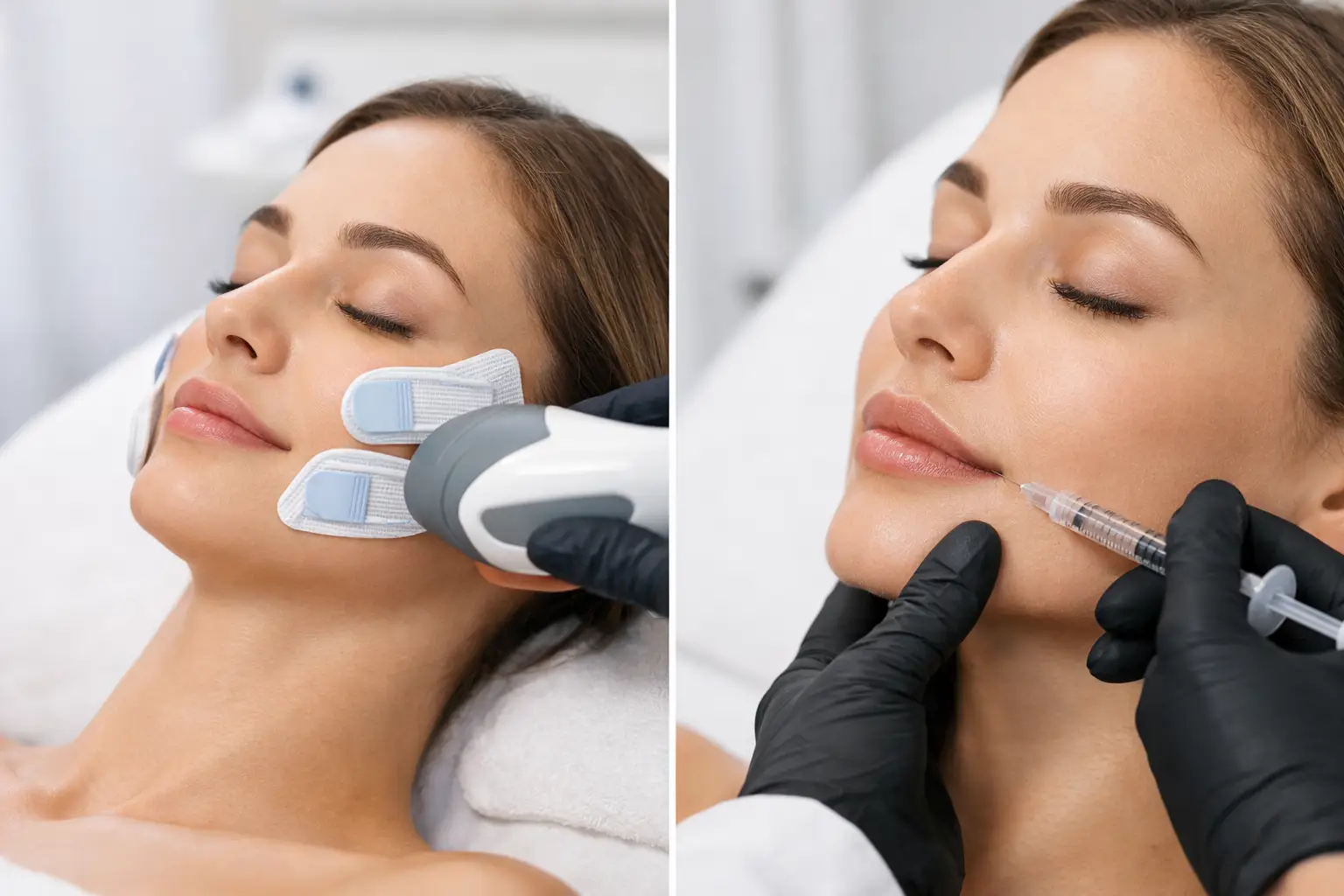
A softer jawline, flatter cheeks, deeper smile lines, and tired-looking eyes can all make the face appear older, but they do not have the same cause. That is why the Emface vs fillers decision is not simply about choosing a non-invasive device or an injectable. The right option depends on whether your primary concern is reduced facial muscle support, skin laxity, lost volume, or a combination of all three.
Emface and dermal fillers can both improve facial definition without surgery, yet they work in very different ways. One is designed to support the facial framework through muscle stimulation and skin remodeling. The other replaces or enhances volume in carefully selected areas. A professional assessment is the most reliable way to determine which approach matches your anatomy and aesthetic goals.
Emface vs Fillers: The Core Difference
Emface is a non-invasive facial treatment that uses synchronized radiofrequency and HIFES muscle stimulation. Radiofrequency delivers controlled heat to support collagen and elastin remodeling in the skin, while HIFES technology activates facial muscles. The goal is to improve facial muscle tone, skin firmness, and the appearance of natural lift over a series of treatments.
Dermal fillers are injectable gels, most commonly made with hyaluronic acid, that are placed beneath the skin to restore volume, improve contour, or soften folds and shadows. Fillers may be used in areas such as the cheeks, lips, chin, jawline, temples, and under-eye region when appropriate.
Put simply, Emface focuses on the structure that supports the face, while fillers address areas where volume has diminished or where more definition is desired. Neither treatment is automatically better. They solve different problems.
When Emface May Be the Better Choice
Emface may be a strong option for patients who want a more refreshed, lifted appearance without injections or recovery time. It is particularly relevant when the face looks less supported overall, but there is not a significant hollow or volume deficit in one specific area.
Facial aging is not only about wrinkles. Over time, facial muscles can lose tone, the skin can become less firm, and contours may appear less defined. This can contribute to a softer lower face, reduced cheek lift, or a generally fatigued appearance. Emface is designed to target these concerns through a non-invasive treatment plan.
Many patients appreciate that there are no needles and that appointments can fit into a busy schedule. Temporary warmth, muscle contractions, or mild redness can occur during or shortly after treatment, but downtime is generally minimal. Results develop gradually as the treatment series progresses and collagen remodeling takes place.
Emface is often best for someone who wants subtle, natural-looking improvement rather than immediate added volume. It can also appeal to patients who are not ready for injectables or who prefer to begin with a technology-based approach.
What Emface Does Not Replace
Emface does not physically fill a hollow temple, replace pronounced cheek volume, or sharpen a recessed chin in the same direct way that dermal filler can. If a visible indentation, deep fold, or loss of facial fullness is the main concern, muscle stimulation alone may not provide the degree of correction needed.
It is also not a substitute for surgery in cases of advanced skin laxity or substantial tissue descent. A consultation should include a realistic discussion of the level of change that can be expected from non-surgical treatment.
When Fillers May Be the Better Choice
Fillers are often the more direct solution when volume loss is clearly driving the concern. For example, cheeks that have become flatter can make the under-eye area look more hollow and can contribute to deeper nasolabial folds. Strategic cheek filler may restore support and improve those transitions without treating each line separately.
Fillers can also be useful for contouring. Chin and jawline filler can improve facial balance, while lip filler can enhance shape, hydration, or symmetry. The treatment is highly customizable because the injector can adjust the product, placement, and amount based on the individual’s features.
Results are typically visible right away, although mild swelling or bruising may temporarily affect the final appearance. Depending on the area treated, product used, and individual metabolism, filler results can last months to longer than a year. Maintenance is usually needed to preserve the effect.
The trade-off is that fillers require injections and should only be performed by an experienced medical aesthetics provider with a detailed understanding of facial anatomy. Overfilling, poor placement, or treating the wrong area can create an unnatural result. The best filler treatment should look balanced and proportionate, not obvious.
Fillers Are Not a Skin-Tightening Treatment
Adding volume can improve the appearance of some folds and shadows, but filler does not tighten lax skin or strengthen facial muscles. In fact, using too much filler to compensate for generalized sagging can make the face look heavy rather than refreshed.
For patients with mild skin laxity and reduced facial support, treating only with filler may not address the underlying reason the face has changed. This is where a combined approach may be worth considering.
Can You Combine Emface and Fillers?
Yes. Emface and fillers can complement each other when both structural support and volume loss are present. Emface can be used to support facial muscle tone and skin quality, while filler can refine specific areas that need restoration or contour.
For example, a patient may choose Emface to improve overall facial lift and firmness, then use a conservative amount of filler in the cheeks or chin to improve balance. Another patient may already have well-maintained filler but want a non-invasive treatment to support the skin and facial framework over time.
Timing matters. A provider should create a plan based on your current filler status, the areas being treated, and your goals. Treatment sequencing is not one-size-fits-all, especially when injectables, radiofrequency, and other skin-tightening technologies are involved.
Factors That Should Guide Your Decision
The mirror can show you where you see change, but it cannot always show why that change has happened. During a consultation, your provider should assess facial proportions, skin quality, volume distribution, muscle activity, and the degree of laxity before recommending a treatment.
If your main concern is a tired, less lifted look with mild laxity, Emface may be a sensible starting point. If you notice hollow cheeks, temples, or under-eyes, or you want more projection in the lips, chin, or jawline, fillers may offer a more targeted correction. If you have several concerns at once, a phased plan can often create a more natural result than trying to correct everything in one appointment.
Budget and maintenance preferences also matter. Emface is generally performed as a treatment series, with follow-up sessions recommended based on the individual. Fillers may provide immediate correction but require periodic maintenance as the product gradually breaks down. The better investment is the option that addresses your actual concern, not the one that happens to be trending.
What to Expect From a Personalized Consultation
At Genesis Medi Clinic, a facial consultation is designed to identify the cause of the concern before selecting a treatment. This means looking beyond a single wrinkle or area of fullness and considering how the cheeks, jawline, skin, and facial support work together.
Bring clear goals to your appointment, such as improving a soft jawline, restoring cheek definition, reducing a hollow appearance, or looking more rested without an overdone result. Your provider can explain whether Emface, fillers, or a combination is appropriate, along with expected timing, maintenance, potential side effects, and limitations.
The most effective non-surgical facial treatment is not the one that changes your features the most. It is the one that corrects the concern you see while keeping your expression, proportions, and natural appearance intact. If you are deciding between Emface and fillers, start with a professional assessment and build a plan around the face you have, not a trend you feel pressured to follow.