
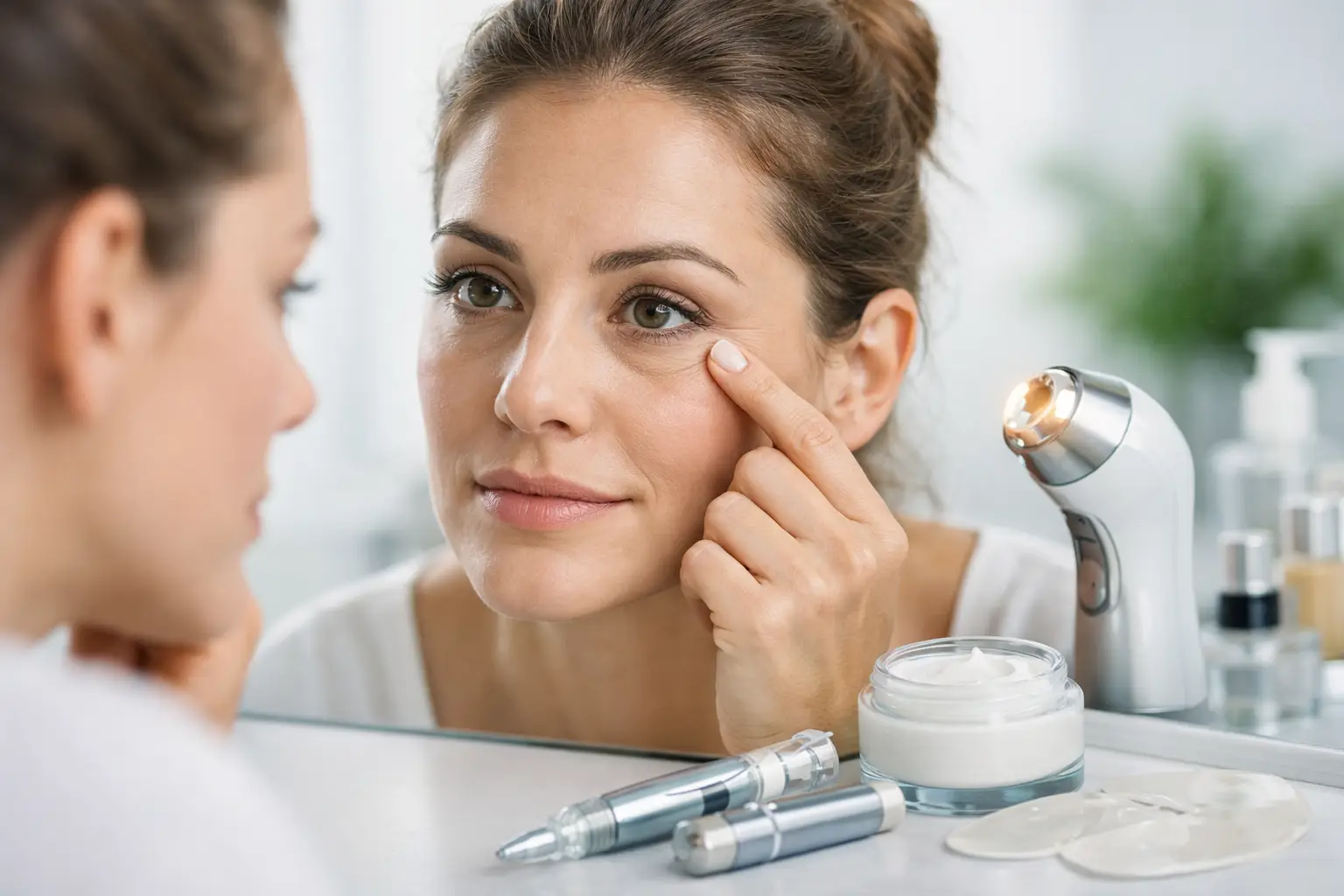
Eye bags can make a well-rested face look tired, stressed, or older than it feels. The best treatments for eye bags are not the same for everyone because “eye bags” can describe several different concerns: temporary morning puffiness, fat pads beneath the eyes, hollow tear troughs, dark shadows, or loose crepey skin. The right correction begins with identifying which of these is creating the appearance of under-eye bags.
Why Eye Bags Need a Precise Diagnosis
The lower eye area is thin, mobile, and highly visible. A treatment that improves one concern can be ineffective, or even unsuitable, for another. For example, adding volume with dermal filler may soften a hollow under-eye area, but it will not remove a prominent fat pad. Skin-tightening treatments may improve fine lines and laxity, yet they cannot fully correct significant protruding fat.
A consultation should assess the skin quality, volume distribution, degree of puffiness, pigmentation, facial structure, and whether the concern changes throughout the day. Genetics, allergies, salt intake, sleep position, aging, sun exposure, and fluid retention can all contribute. In many patients, the issue is not one cause but a combination of volume loss in the cheeks, mild lower eyelid laxity, and shadowing below the eyes.
Best Treatments for Eye Bags by Concern
Temporary Puffiness and Fluid Retention
If your eye bags are most noticeable in the morning and improve later in the day, fluid retention may be a major factor. At-home measures can make a meaningful difference in this situation. Cold compresses, adequate sleep, allergy management, reducing excess sodium, and sleeping with the head slightly elevated may help limit swelling.
These steps are useful for mild, fluctuating puffiness, but they do not reposition fat pads or tighten loose skin. Persistent swelling should also be evaluated carefully. Under-eye puffiness can occasionally be related to allergies, irritation, or medical concerns that should be discussed with a physician.
Hollow Under-Eyes and Tear Trough Shadows
Some people describe eye bags when the real issue is volume loss beneath the lower eyelid. A hollow tear trough creates a shadow that can make the transition between the eyelid and cheek look deeper and more fatigued. As midface volume decreases with age, this contrast can become more pronounced.
Strategically placed hyaluronic acid dermal filler can smooth the under-eye-to-cheek transition in appropriate candidates. In many cases, support is placed in the mid-cheek rather than directly under the eyes. This approach can improve facial balance and reduce the shadowing that contributes to a tired appearance.
Under-eye filler is highly technique-sensitive. The area has delicate anatomy and is prone to swelling, unevenness, or a blue-gray cast if product is placed too superficially or if the wrong patient is selected. It should be performed only after an in-person assessment by an experienced medical injector. Patients with significant fluid retention or prominent lower eyelid fat pads may not be ideal candidates for tear trough filler.
Loose, Crepey Skin and Fine Lines
When skin laxity is the primary concern, collagen-stimulating treatments may be more appropriate than filler. Radiofrequency-based skin tightening and radiofrequency microneedling can encourage collagen remodeling, helping improve texture, fine lines, and mild laxity over a series of treatments. The goal is gradual tightening and better skin quality, not an instant surgical-level lift.
Treatments such as Exion RF/Target Ultrasound Skin Tightening or Exion AI RF Microneedling may be considered depending on the treatment area, skin condition, and the provider’s assessment of safety around the eyes. Energy settings and treatment placement must be customized carefully because the under-eye region requires a conservative, precise approach.
For patients with mild skin laxity, these treatments can create a fresher, firmer appearance over time. They are often best suited to people who want non-surgical improvement and understand that collagen remodeling develops gradually over several weeks to months.
Skin Texture, Dullness, and Dark-Looking Under-Eyes
The appearance of dark circles is not always caused by pigmentation. Under-eye darkness can result from shadows, thin skin, visible blood vessels, hollowness, or true excess pigment. Treating darkness effectively means separating these causes rather than applying a one-size-fits-all solution.
For thin, dull, textured skin, microneedling or carefully selected skin rejuvenation treatments may support healthier-looking skin and collagen production. PRP-based treatments are also sometimes used to improve overall skin quality in the under-eye area. Results can vary, and PRP is generally better viewed as a skin-quality treatment than a correction for prominent fat pads or deep hollows.
Medical-grade skincare, daily broad-spectrum sunscreen, and gentle eye-area products can support professional treatment. However, skincare alone has limits. It cannot replace lost facial volume or remove excess lower eyelid fat.
Prominent Fat Pads and Structural Eye Bags
True eye bags often occur when lower eyelid fat pads become more visible with age or genetics. They may appear as persistent bulges beneath the eyes, even when you are rested and well hydrated. Non-surgical treatments can sometimes soften the surrounding skin, improve cheek support, or reduce the contrast around the bags, but they cannot physically remove protruding fat.
For significant structural bags, lower blepharoplasty may offer the most definitive correction. This is a surgical procedure and should be discussed with a qualified oculoplastic or facial plastic surgeon. A non-surgical consultation remains valuable because some patients have mild concerns that can be improved without surgery, while others may benefit from a surgical referral rather than investing in treatments that cannot deliver their desired result.
What a Customized Treatment Plan May Include
The most natural results often come from treating the face as a whole rather than focusing only on the lower eyelid. A plan may combine conservative cheek filler for structural support, collagen-stimulating treatments for skin laxity, and a targeted skincare routine for texture and pigmentation. The exact combination depends on whether your concern is puffiness, hollowness, laxity, discoloration, or all of the above.
This approach also helps avoid overfilling. Adding too much filler directly beneath the eyes can create heaviness or worsen the look of swelling. A well-designed plan respects the anatomy of the eyelid and aims for a rested, balanced result rather than a dramatically altered appearance.
What to Expect From Non-Surgical Treatment
Injectable results may be visible immediately, although swelling or bruising can occur and final settling takes time. Energy-based skin tightening usually requires a treatment series and produces gradual improvement as collagen remodels. Maintenance may be recommended because aging, skin laxity, and volume loss continue over time.
During your consultation, ask what the treatment can realistically improve, how many sessions may be needed, what downtime to expect, and whether there is a safer or more effective alternative for your anatomy. Be cautious of any provider who promises that one treatment will erase all eye bags without assessing the cause.
For patients in Richmond Hill, Markham, Vaughan, North York, Newmarket, and Toronto, Genesis Medi Clinic can help determine whether your under-eye concern is better suited to filler, skin tightening, collagen-focused treatment, or a different approach. A clear diagnosis is the first step toward looking refreshed without looking overdone.
The goal is not to chase a completely line-free under-eye area. It is to reduce the shadows, puffiness, and laxity that make you look less rested than you are, using a treatment plan that fits your facial structure and your expectations.